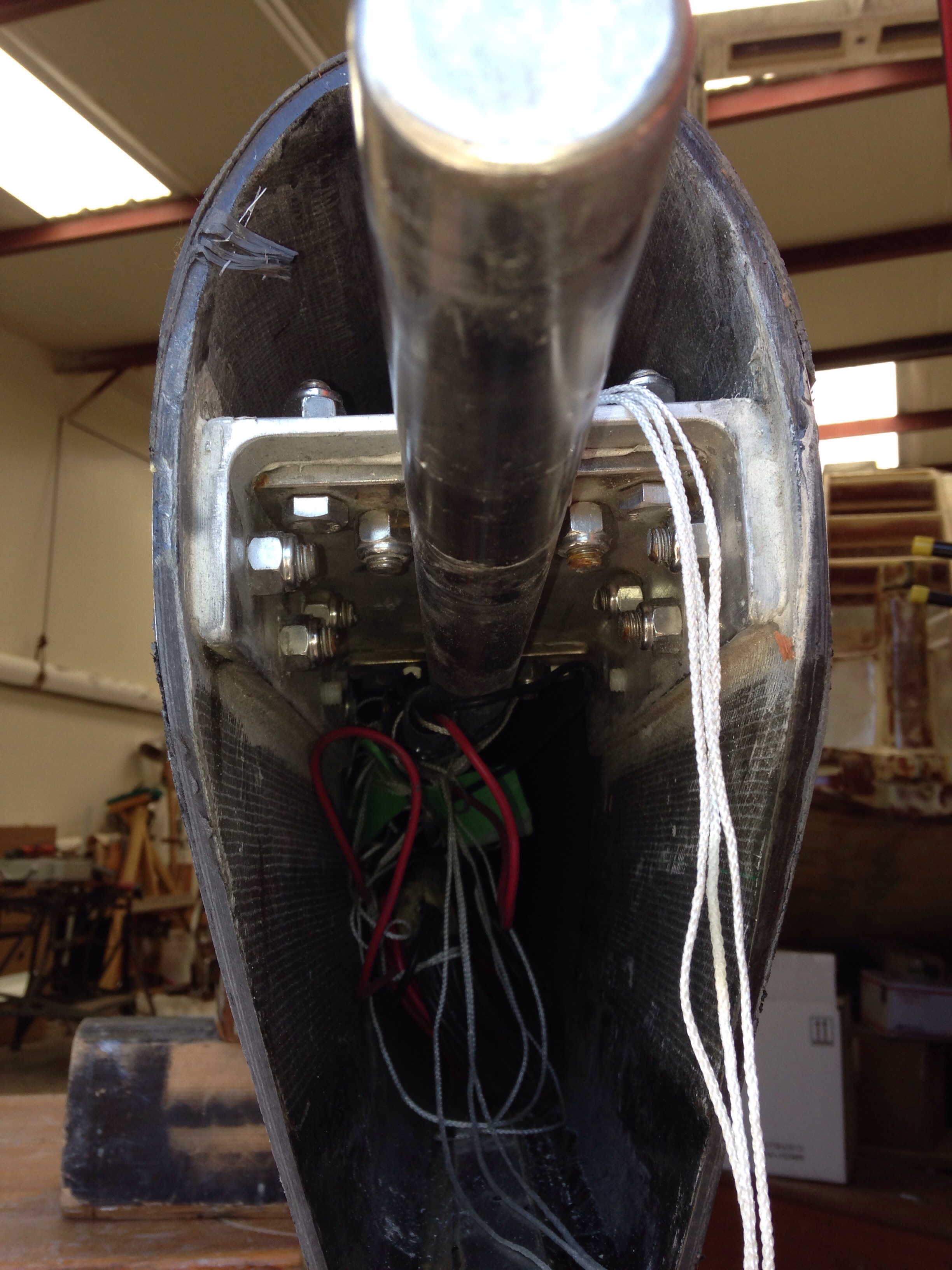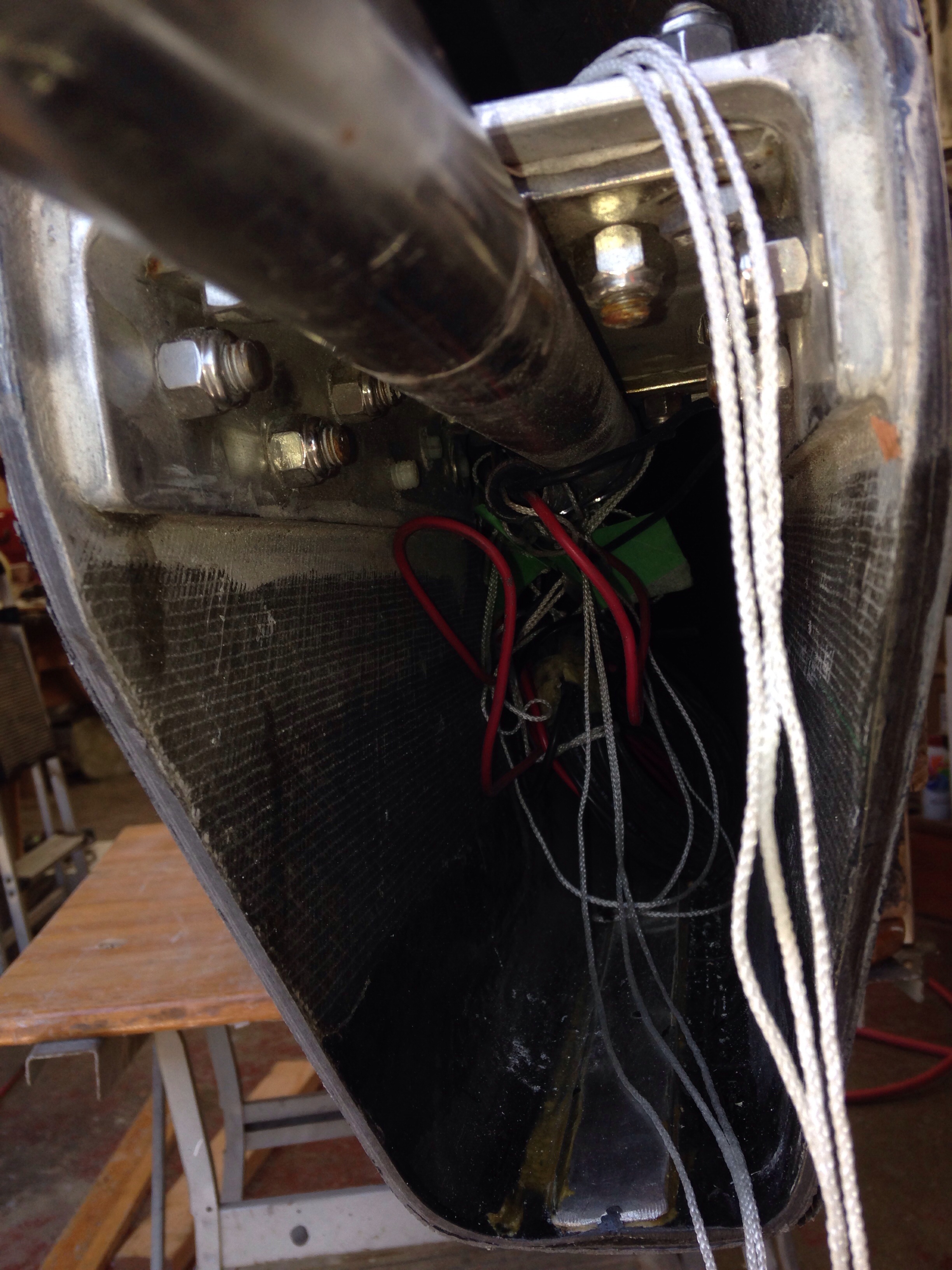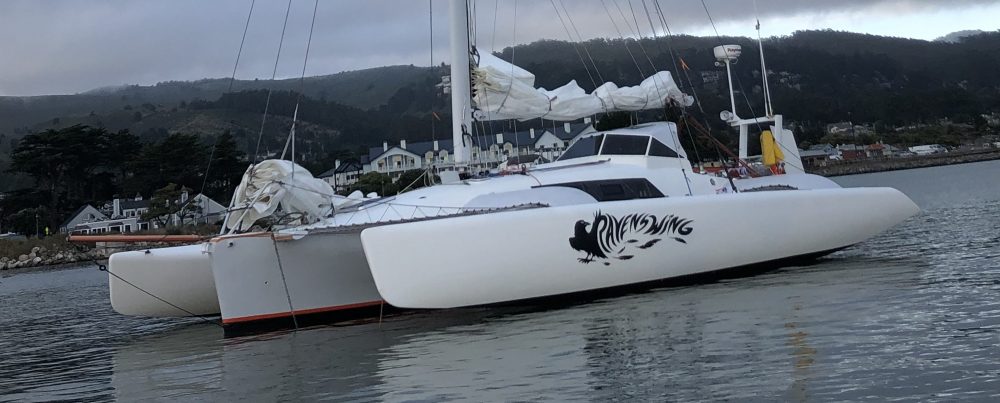
Upright again

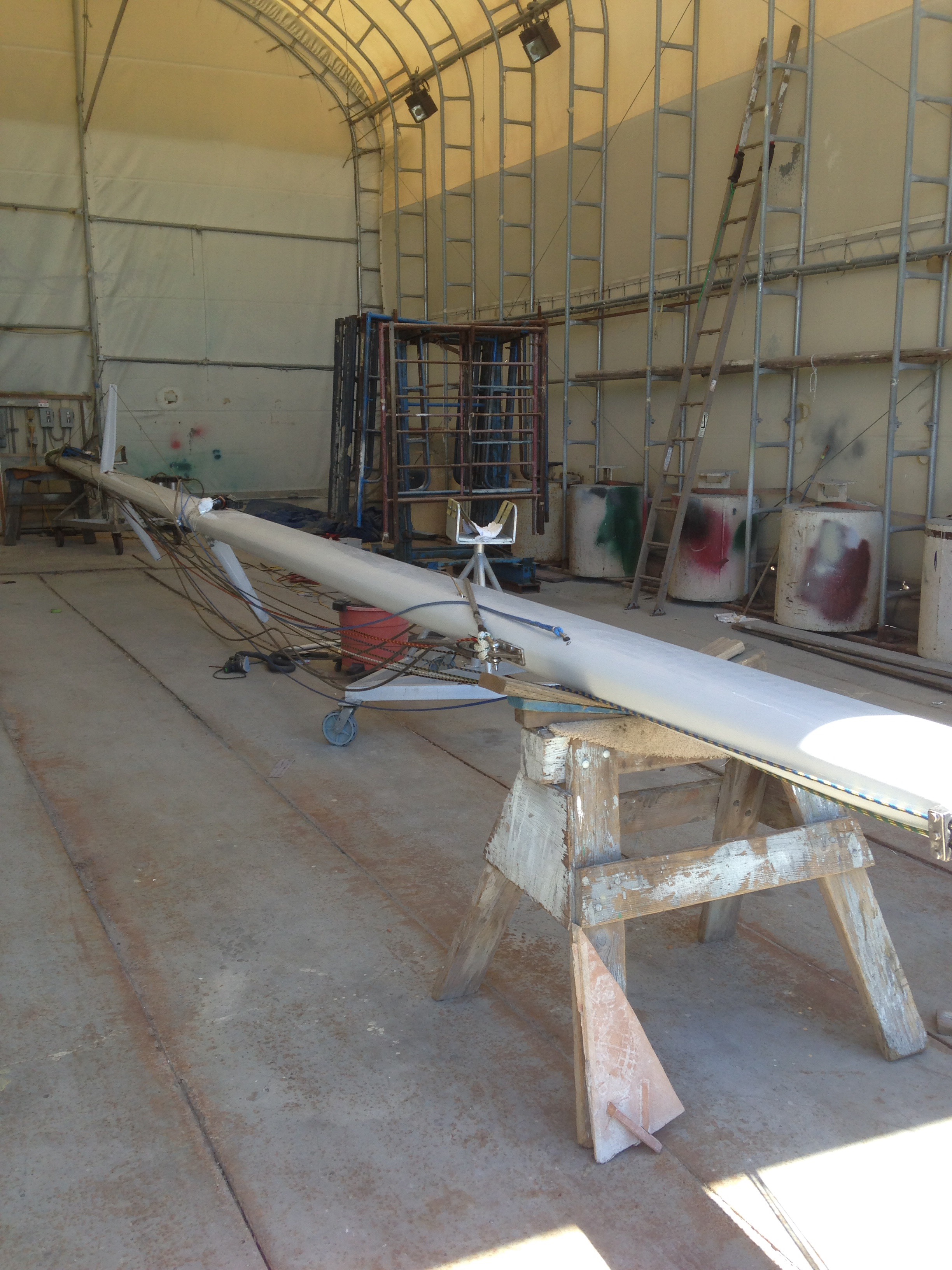
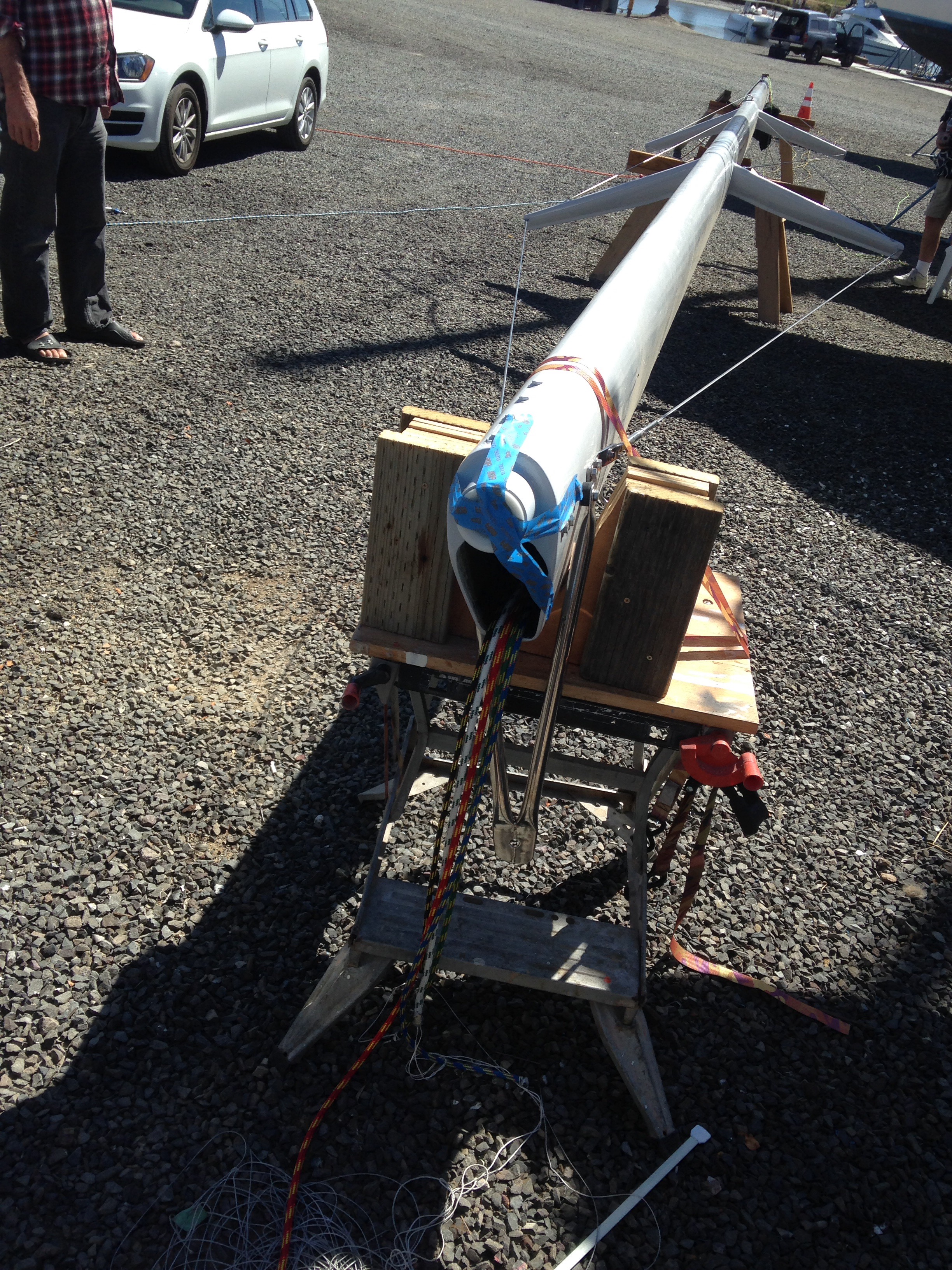
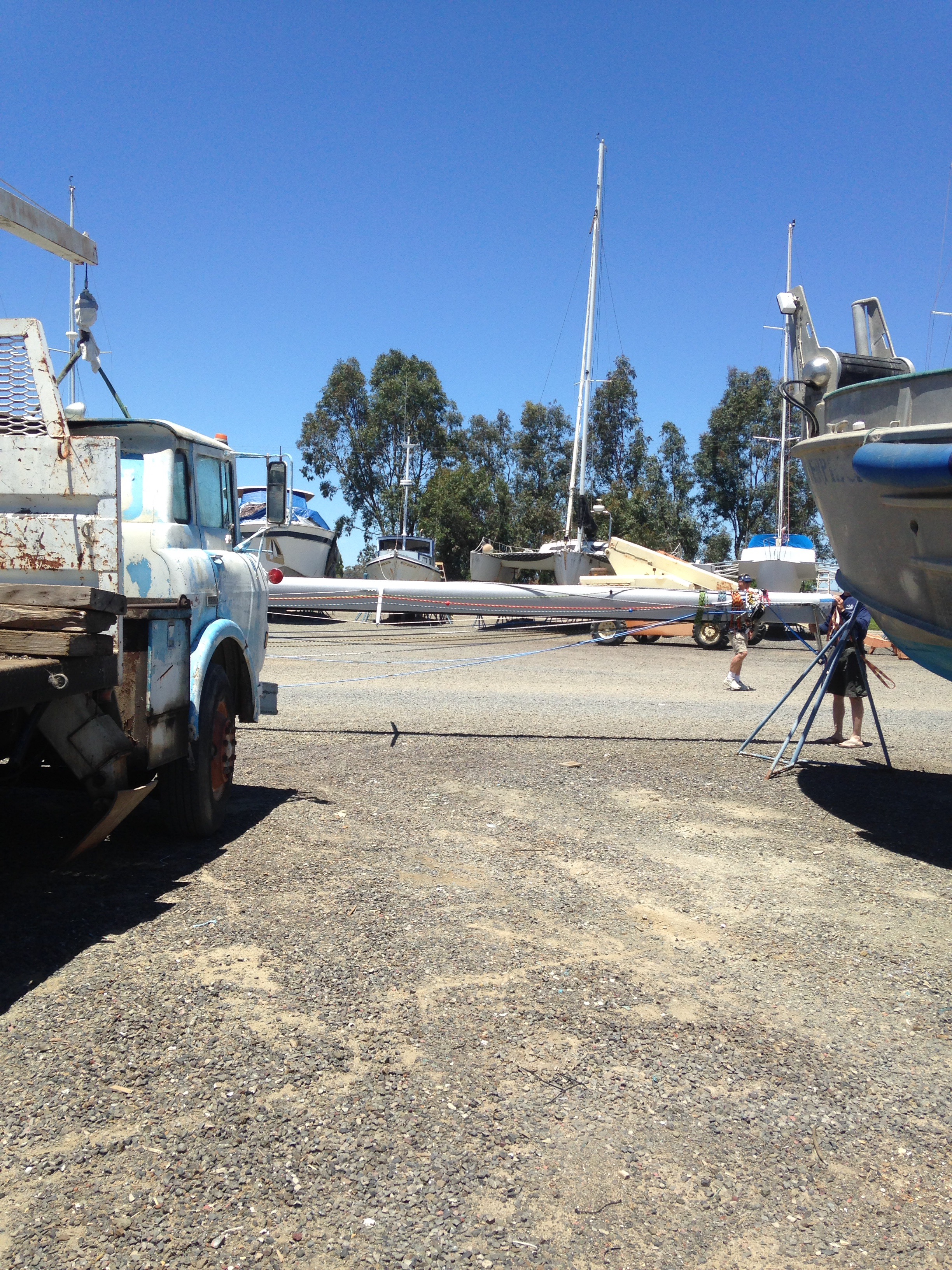
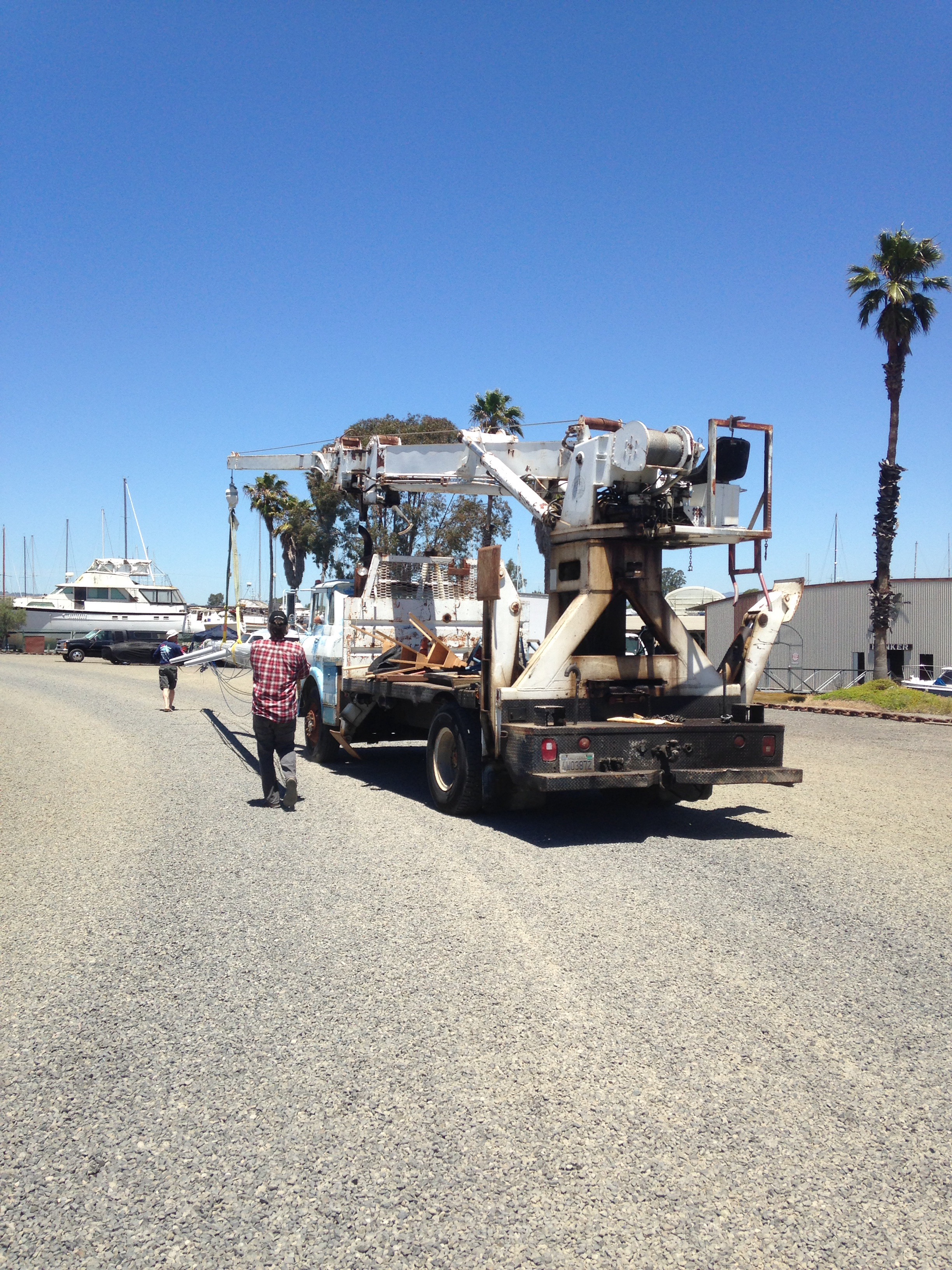
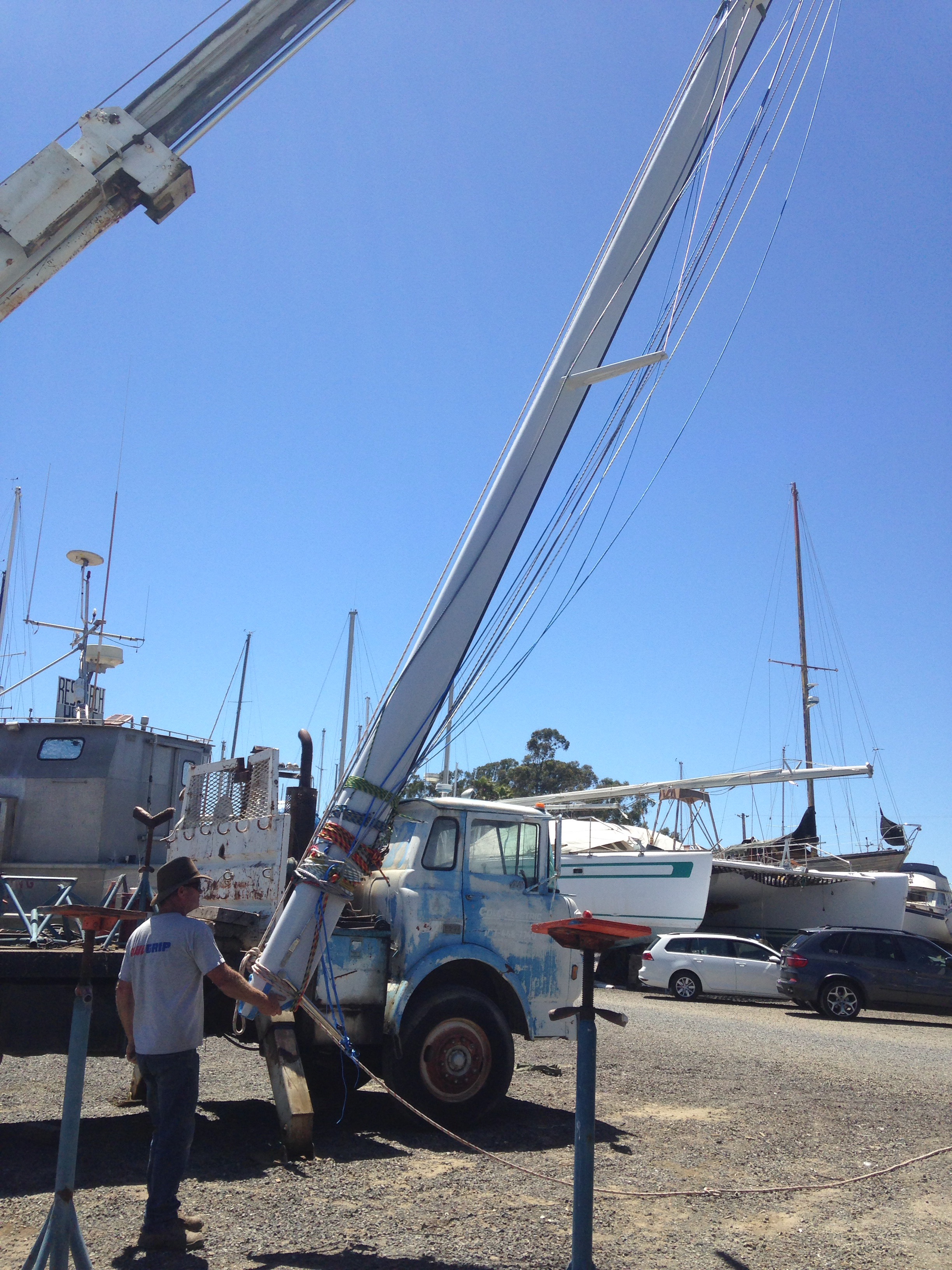
The KKMI project managers ended their week Friday with a quick lift of Ravenswing’s mast. We had it all ready to simply slide home the two cap shroud and one forestay big clevis pins and then the guys could release the crane. They only charged for 15 minutes of time (good thing, because it’s $300 an hour!)

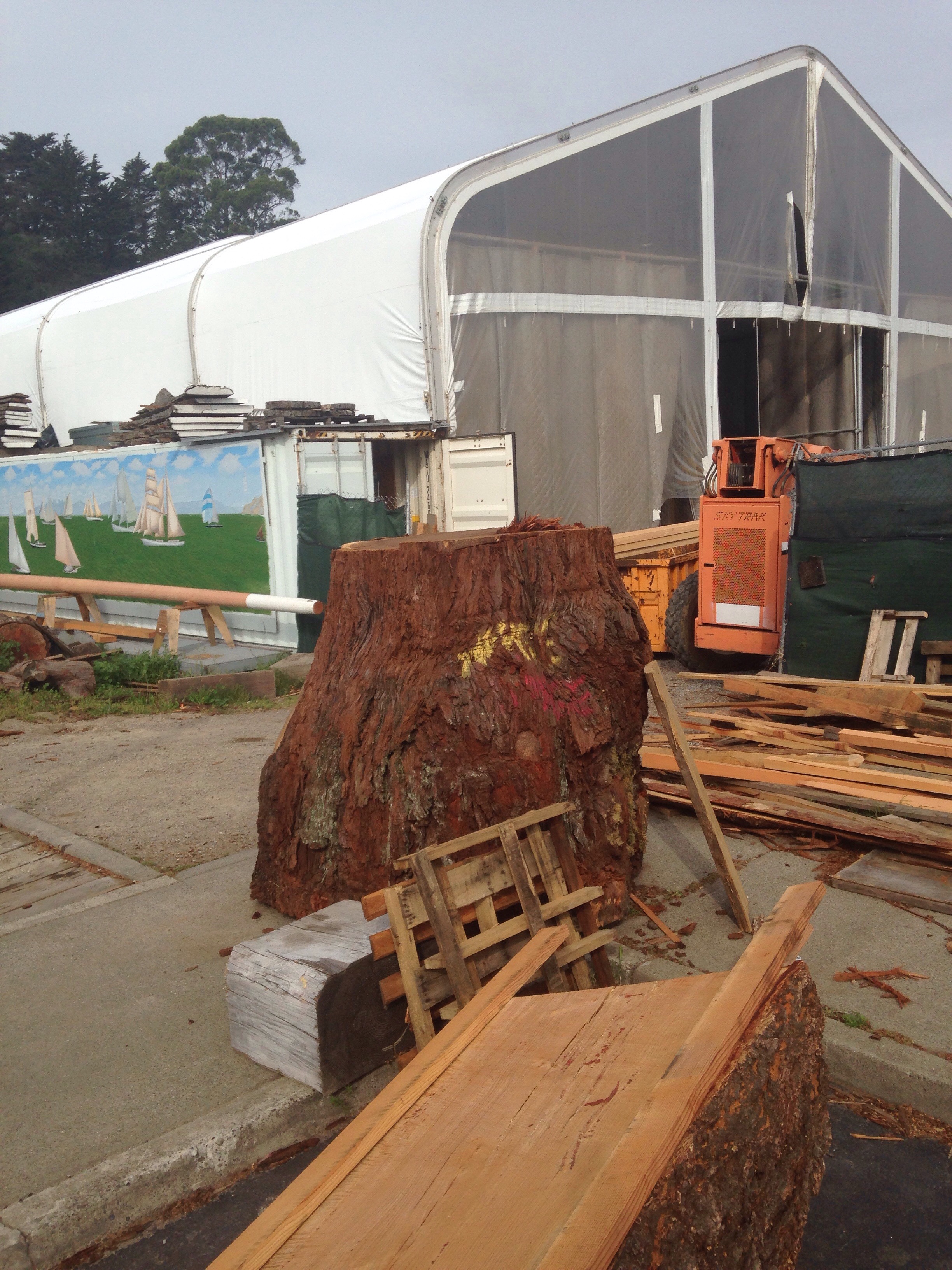
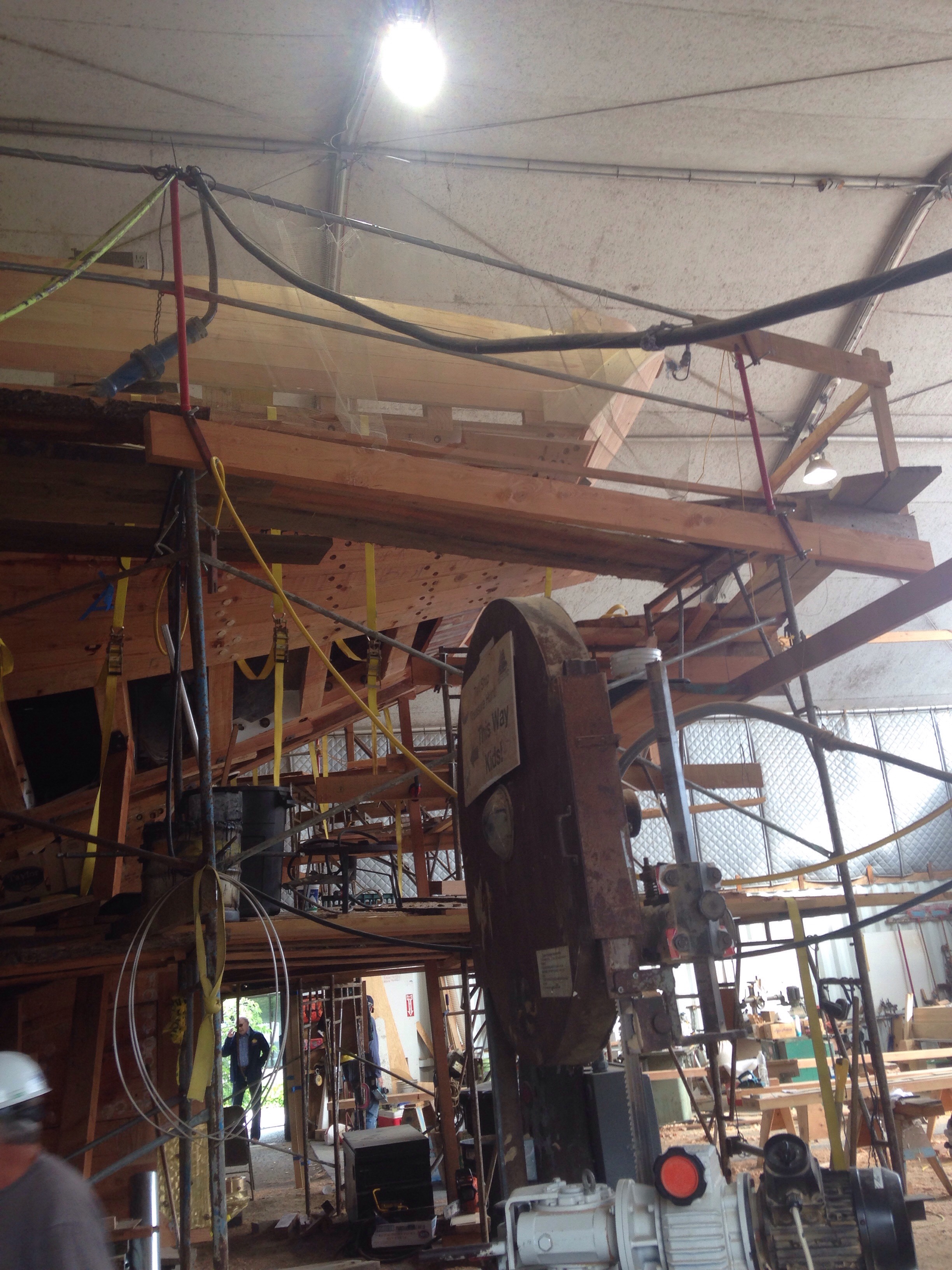
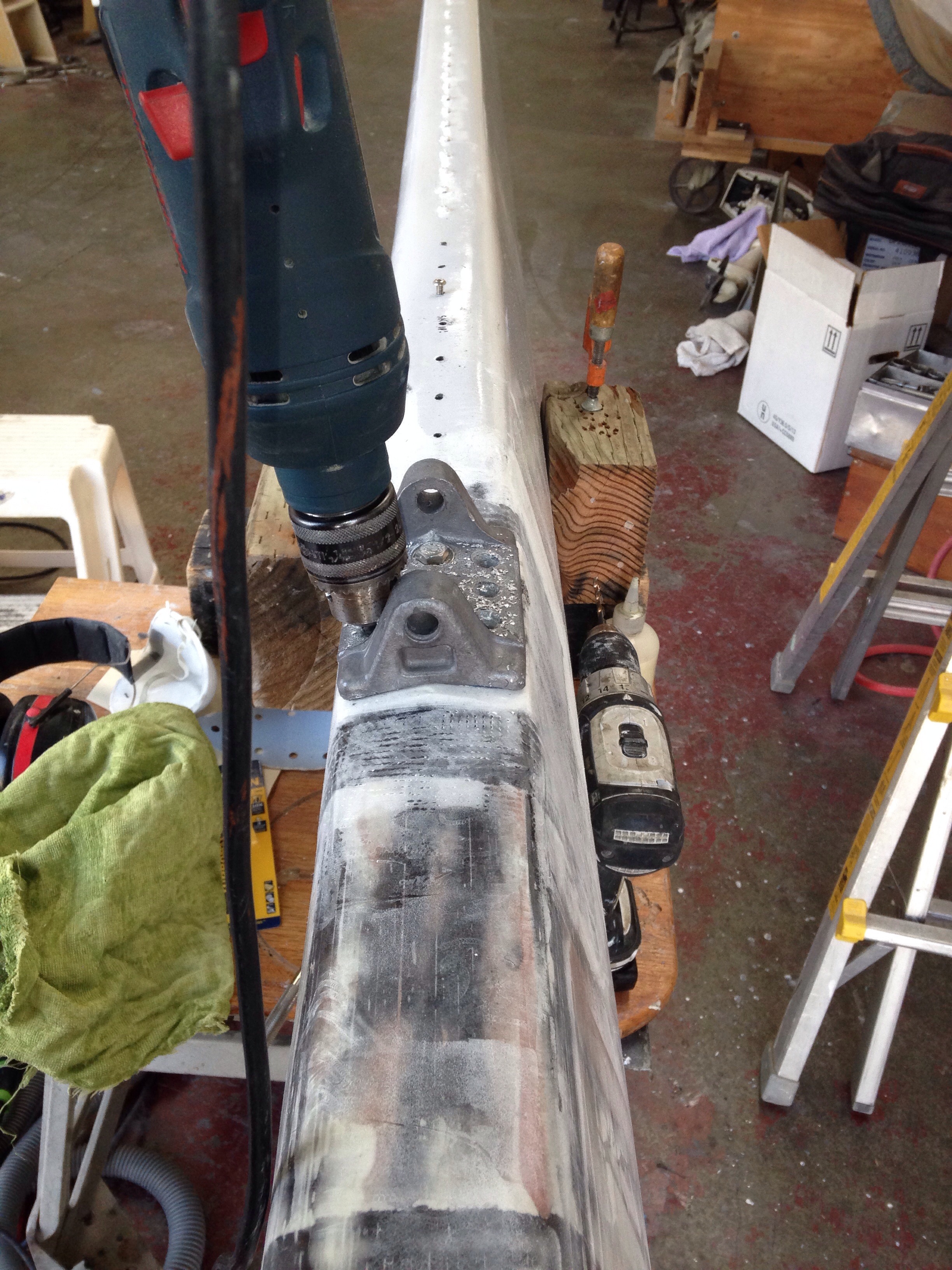
So let’s rewind that a bit. Here’s the portable laminate repair shop;

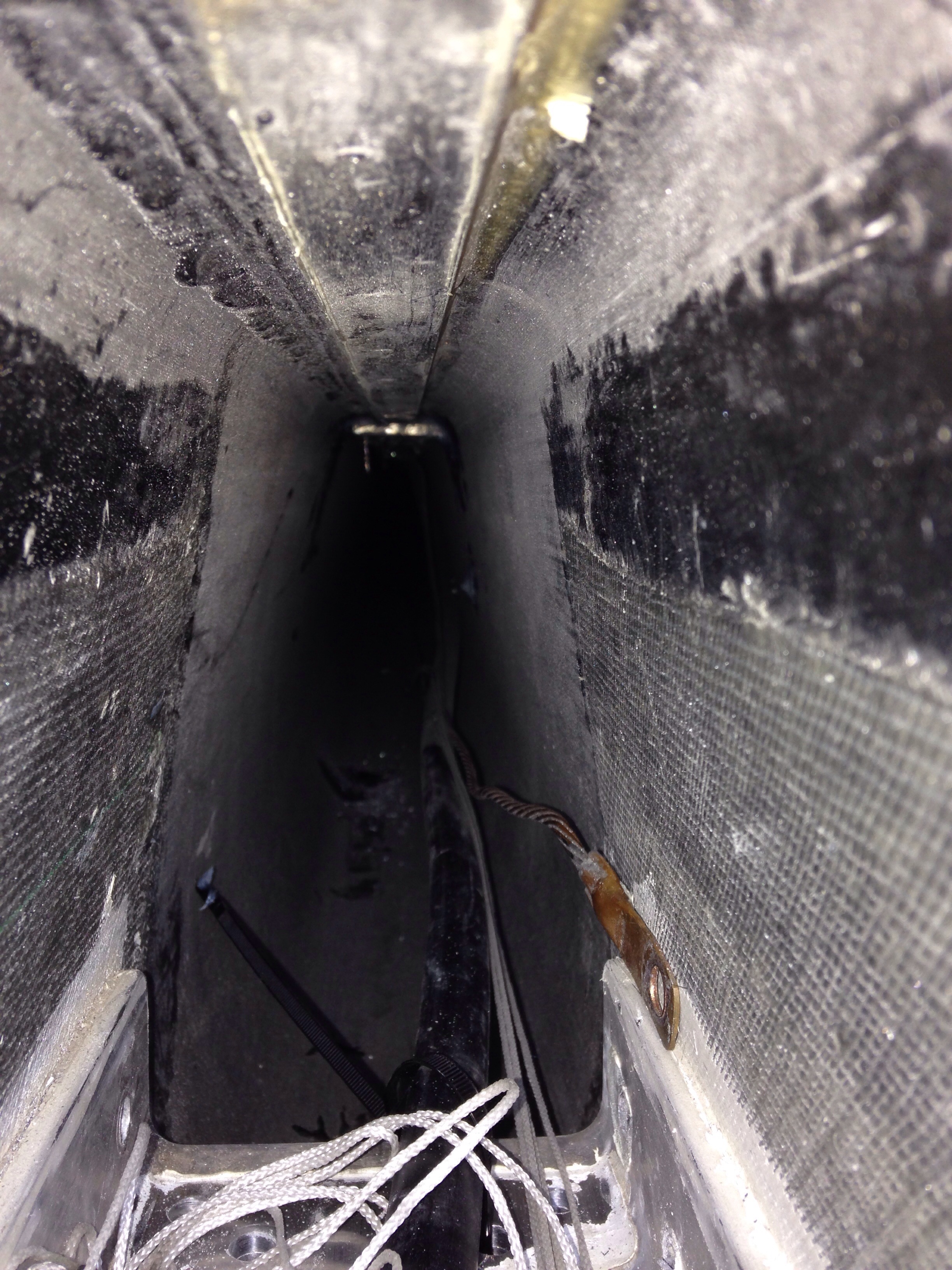
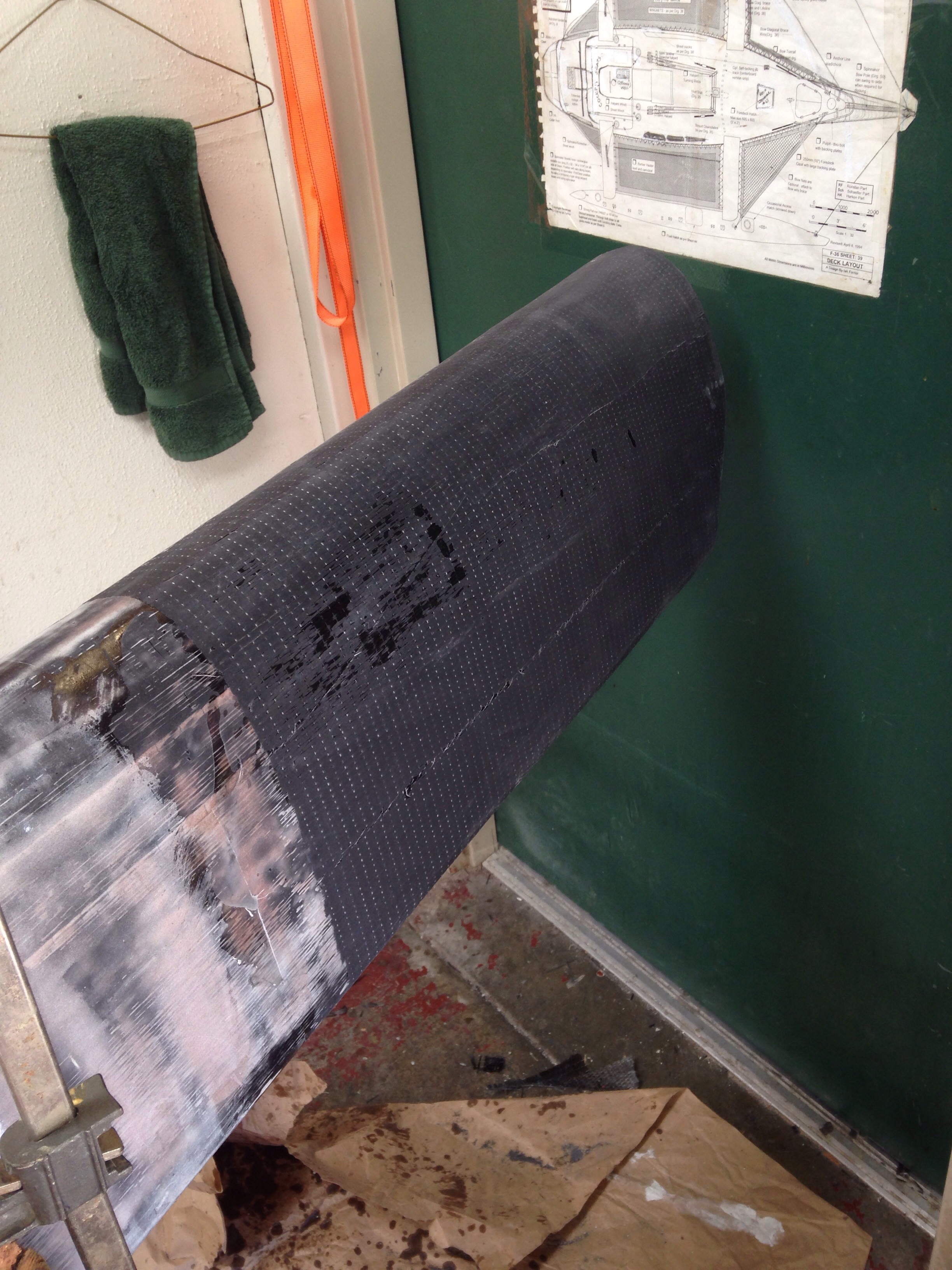
First we did a layer of 9oz Doublebias Carbon, then 12oz uni straps crossing over/under the opposite side. These ended shy of the sail track in each side. Then another layer of the DB. 
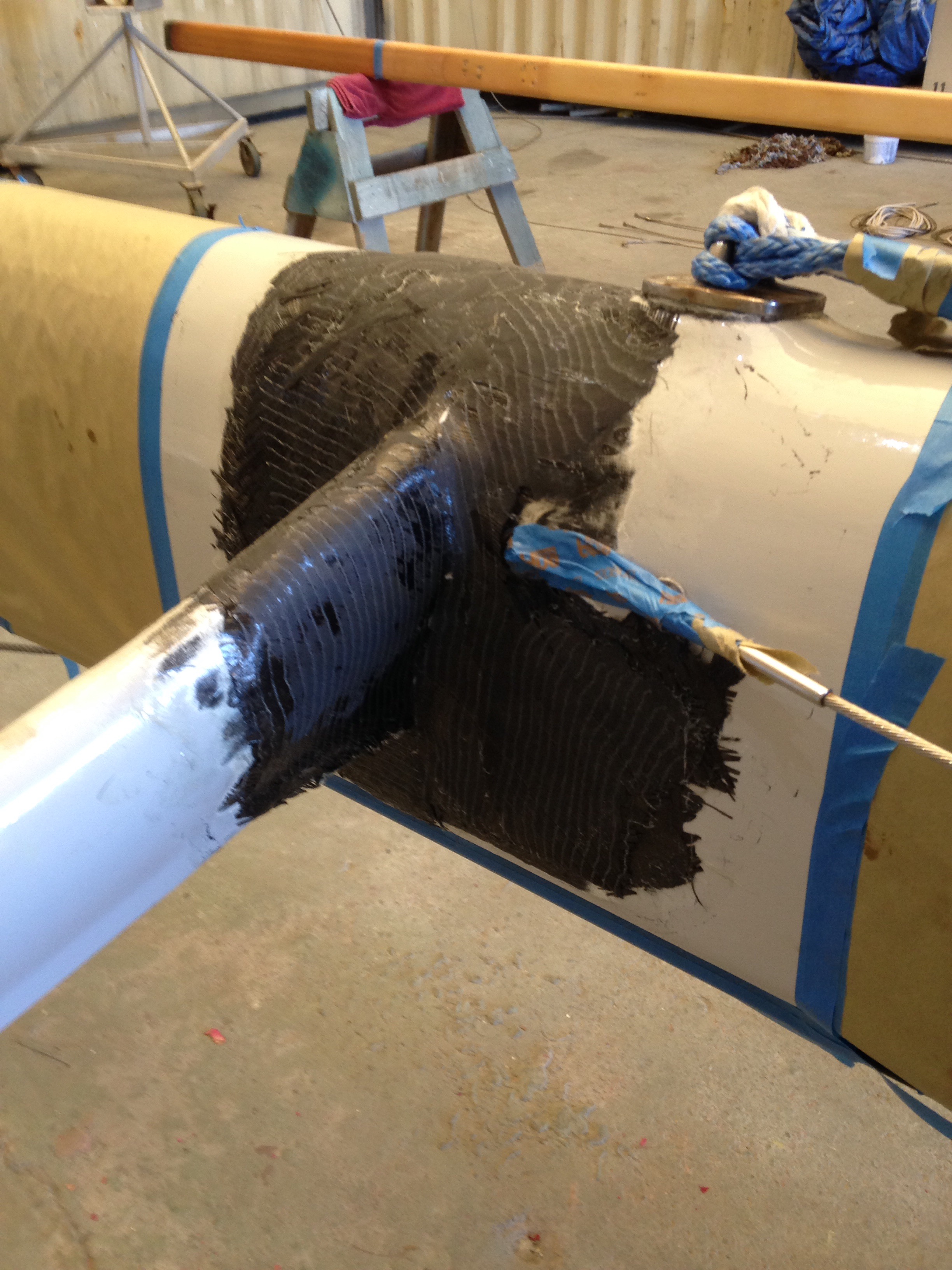
At this point Keith / Skateaway Designs returned from an east coast voyage on his boat, and opined that these spreaders are putting undue strain on the mast wall by point loading in the center; the only real cure at this point was to extend the spreader root and better disperse the load through the new carbon laminates. So we scrambled at the boatyard to scrounge up some core cell foam and shaped triangle gussets with the little oscillating multi tool. 

Keith’s second point was that it wasn’t good enough to have stopped shy of the track; these really need to be continuous bands that tie the two sides together. Hmmmm, we’re not about to drill holes in our nice new Todes sail track! But there’s 2″ between each of the clips that hold the track to the mast, and about 1/16″ of play between the fitted track and the actual mast surface. Just enough to slide 6oz Carbon uni fabric underneath…

And slip a bit of plastic in there, hold that in place, then slide the carbon back and forth to wet it with epoxy and not have that cement the track to the mast! Thankfully that all worked as intended. 
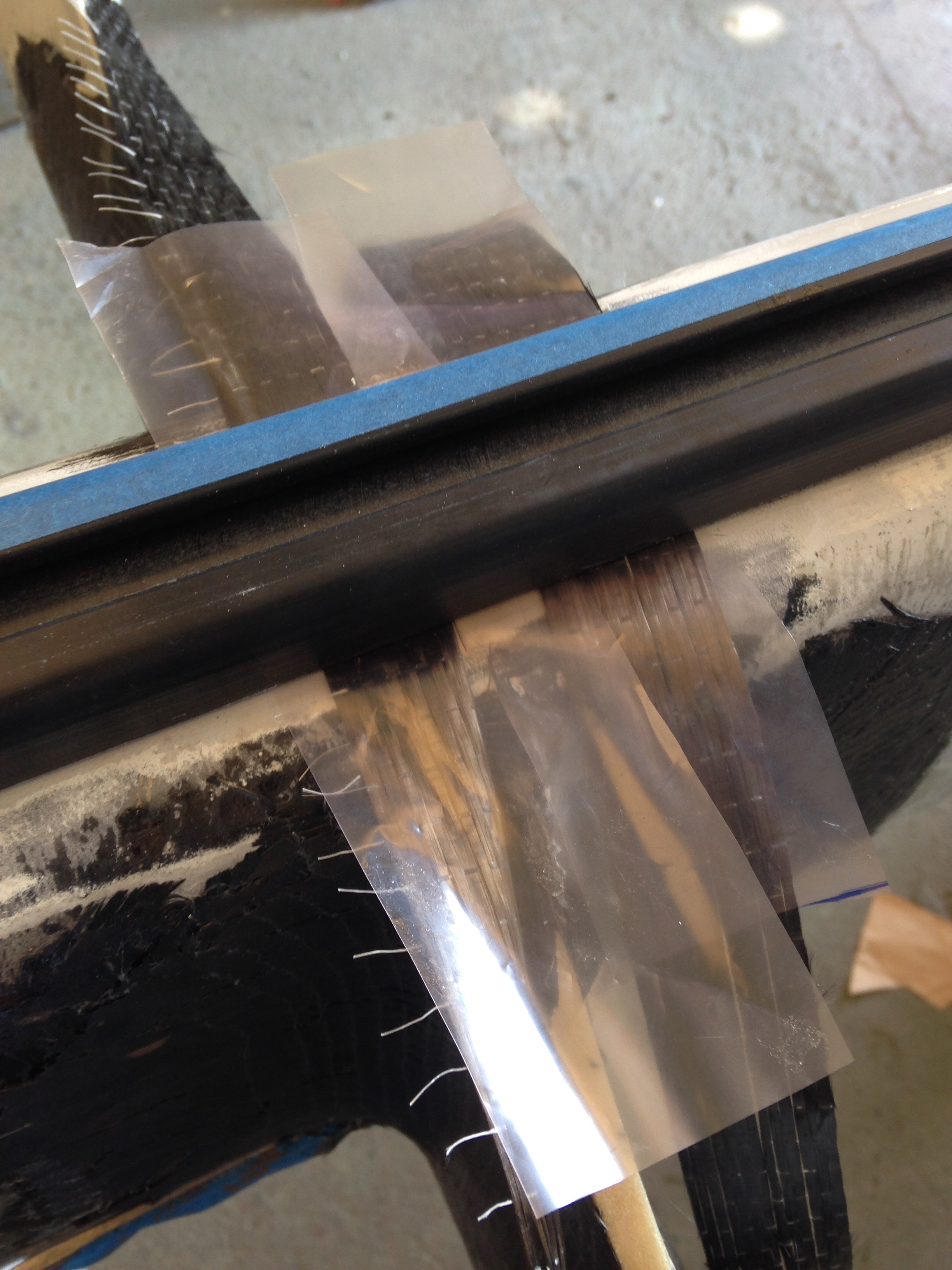
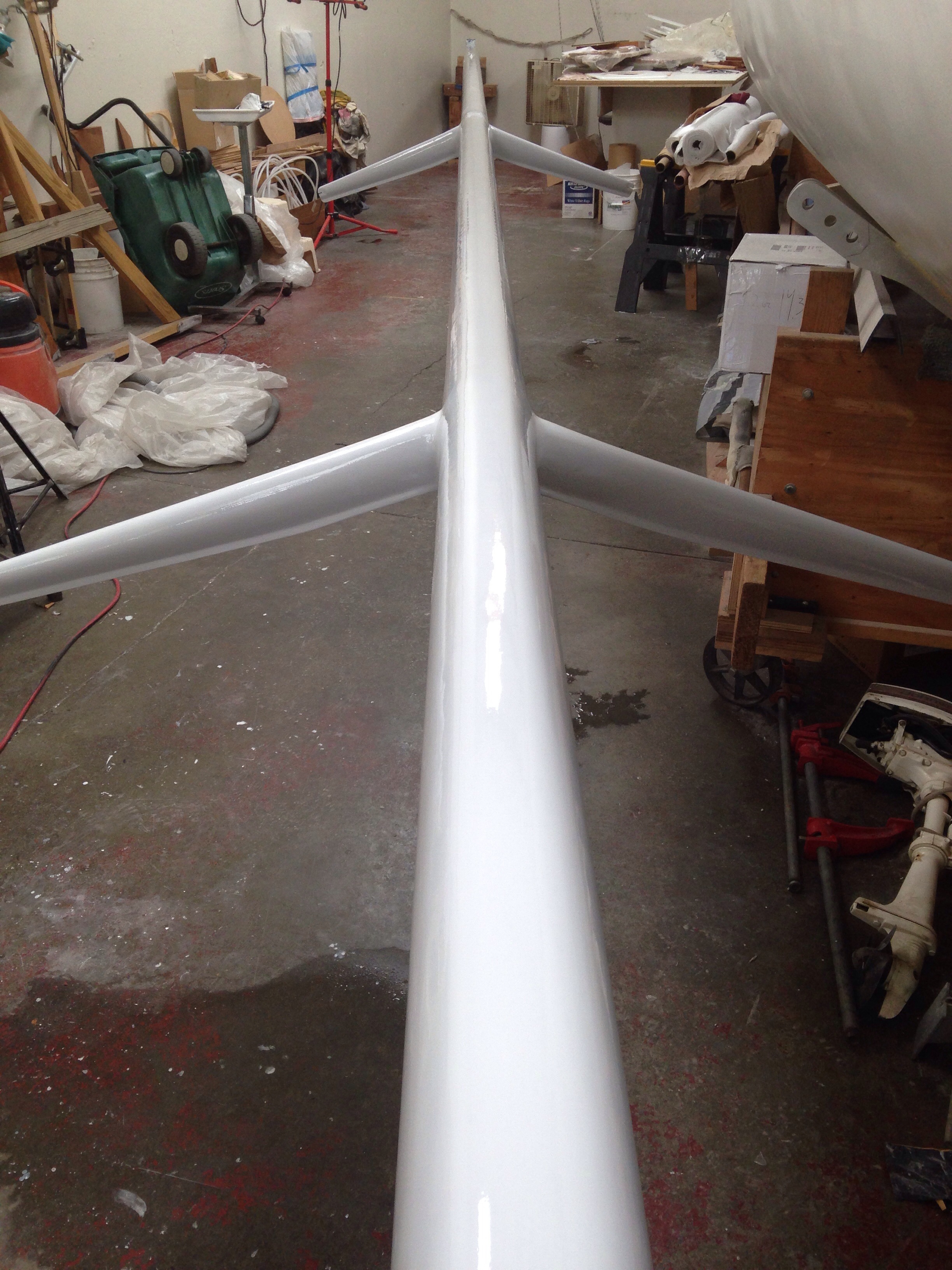
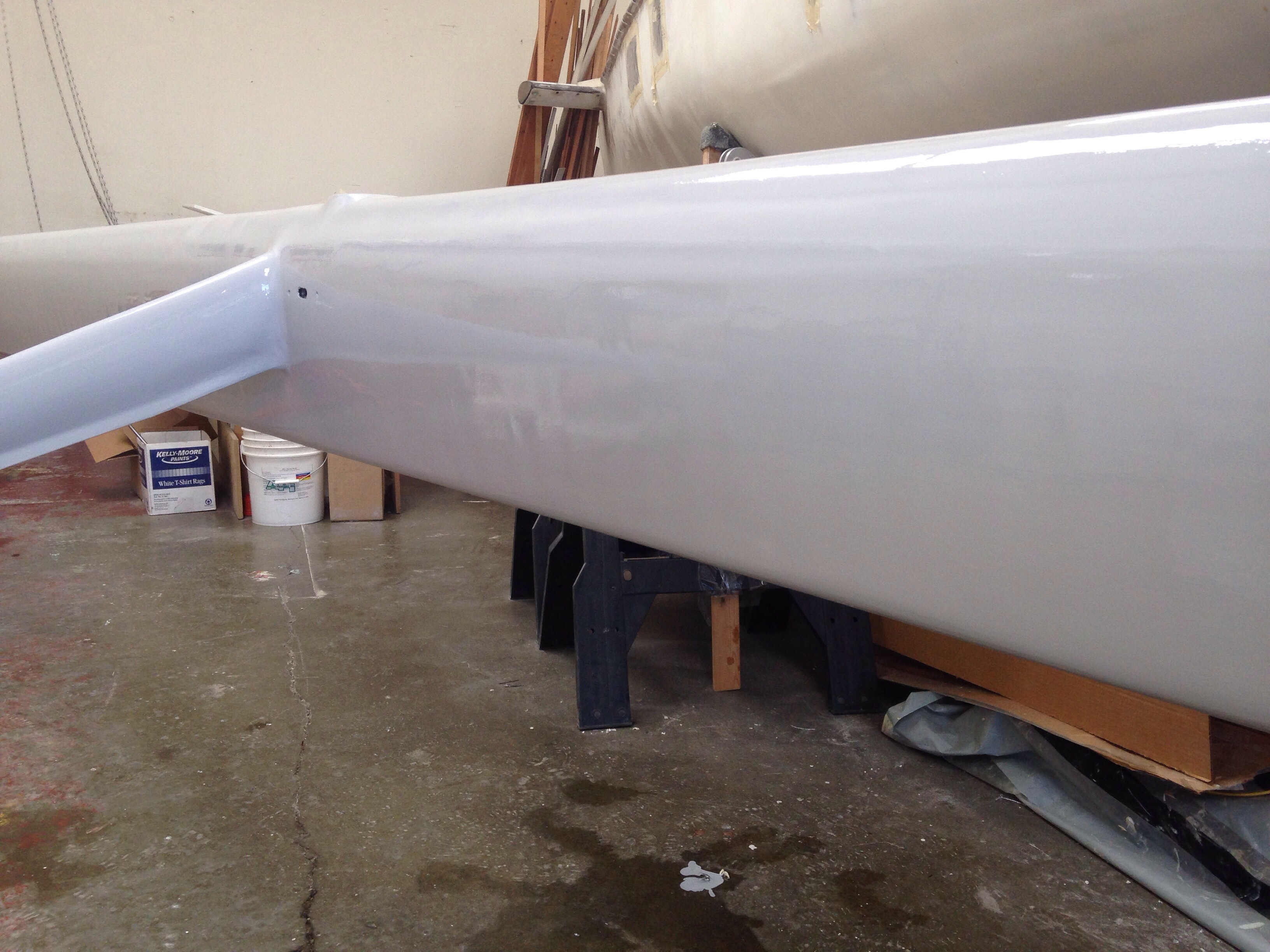
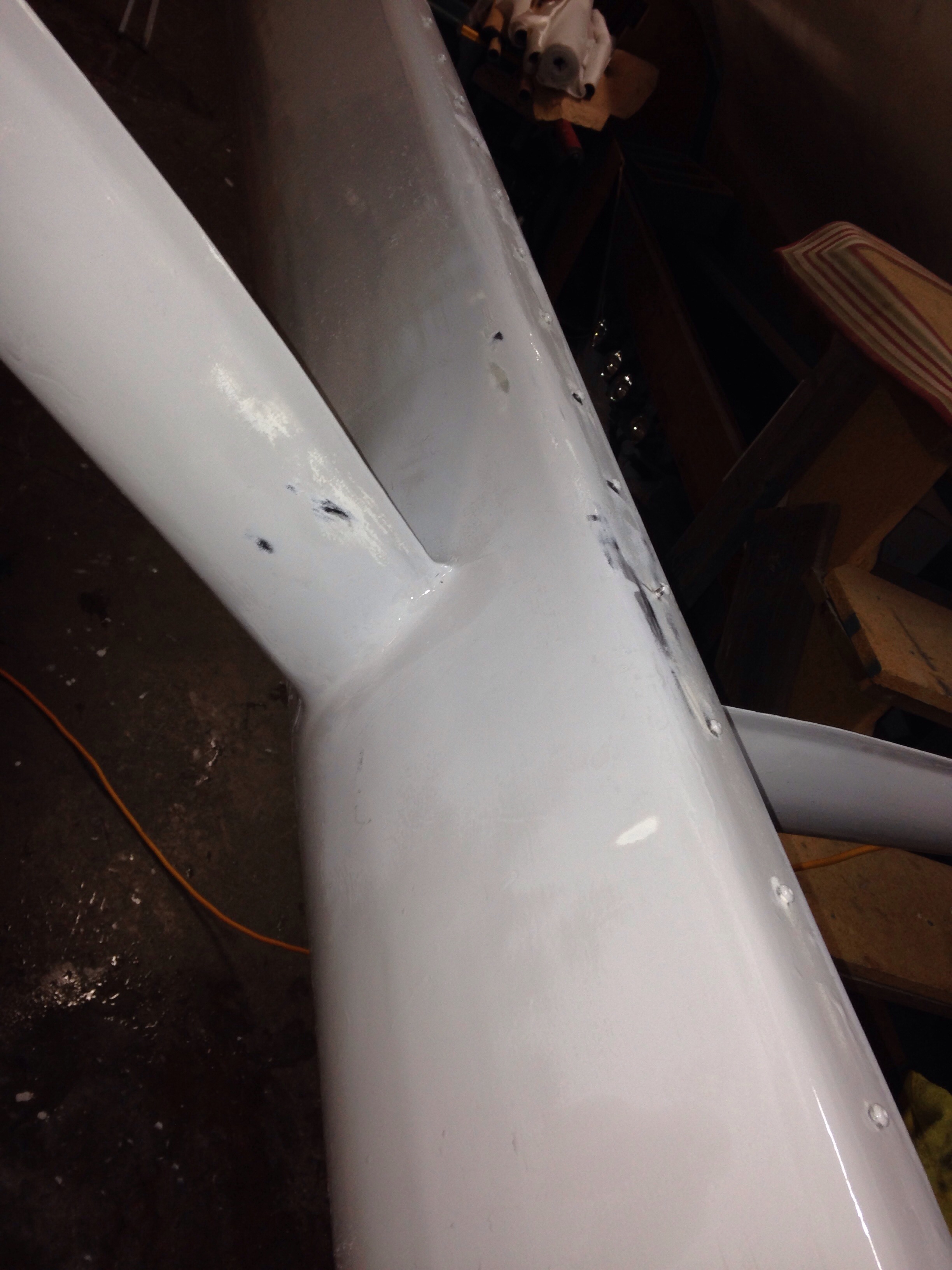
A bit of fairing and painting (the yard gives a gate key so DIY’ers can stay late in to the night waiting to recoat) and it was soon all done. 

Note to self: it was starboard upper that broke away. That one got an extra 9ozDB layer to approximate the existing fabrics on the other three. Also remember we chose not to do a second fairing pass, so the surface imperfections at the spreader roots are only cosmetic. 

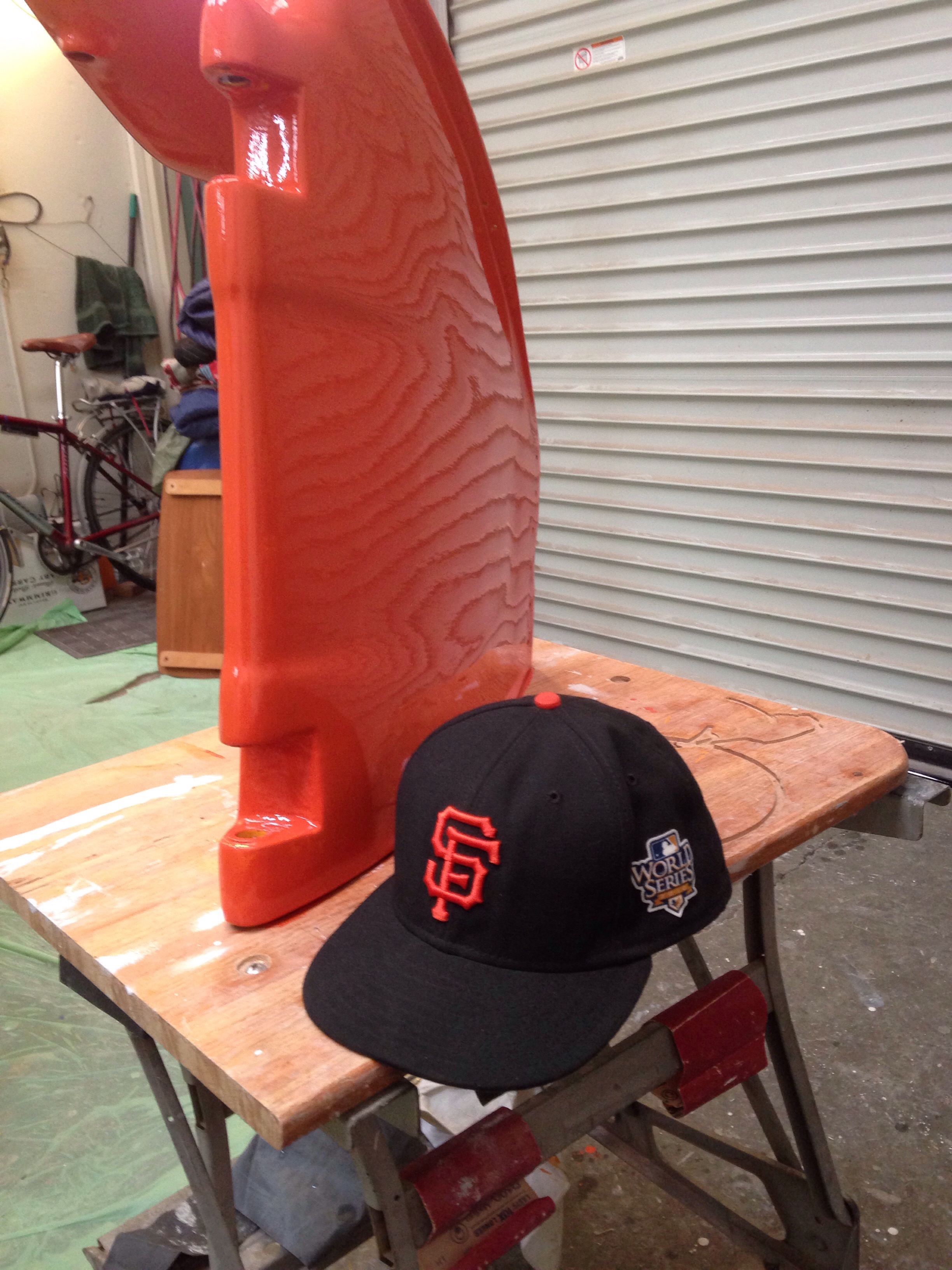
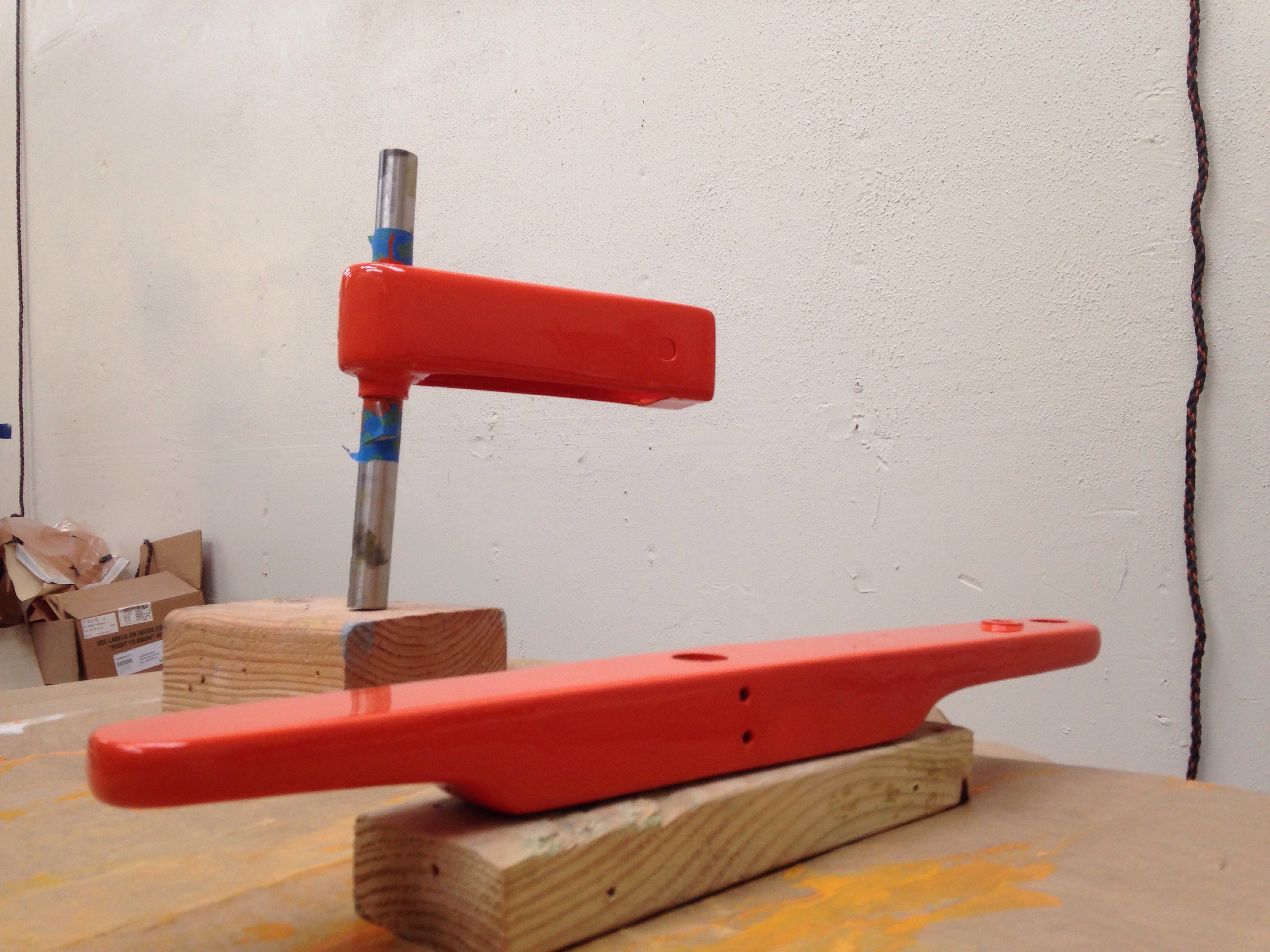
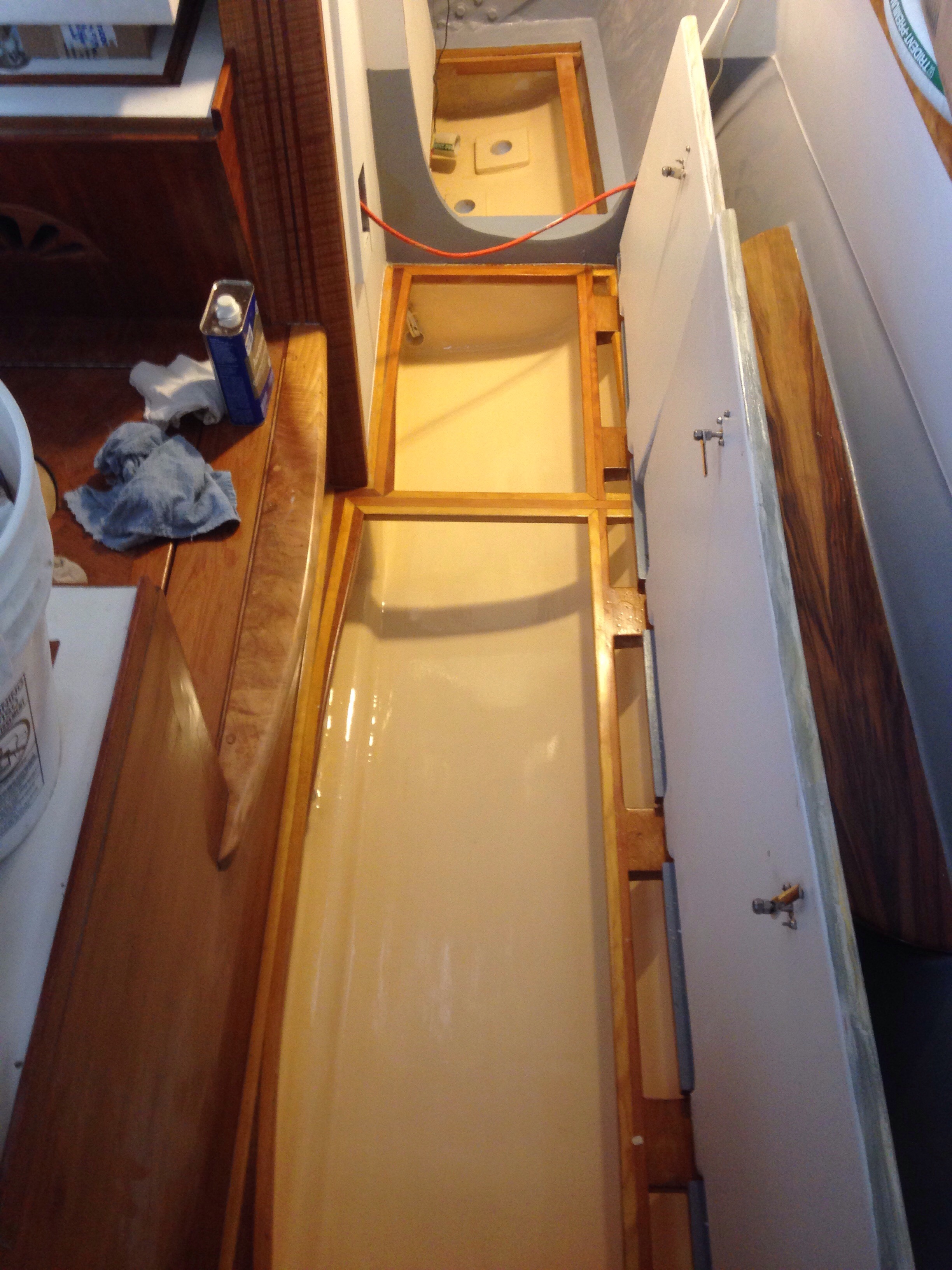
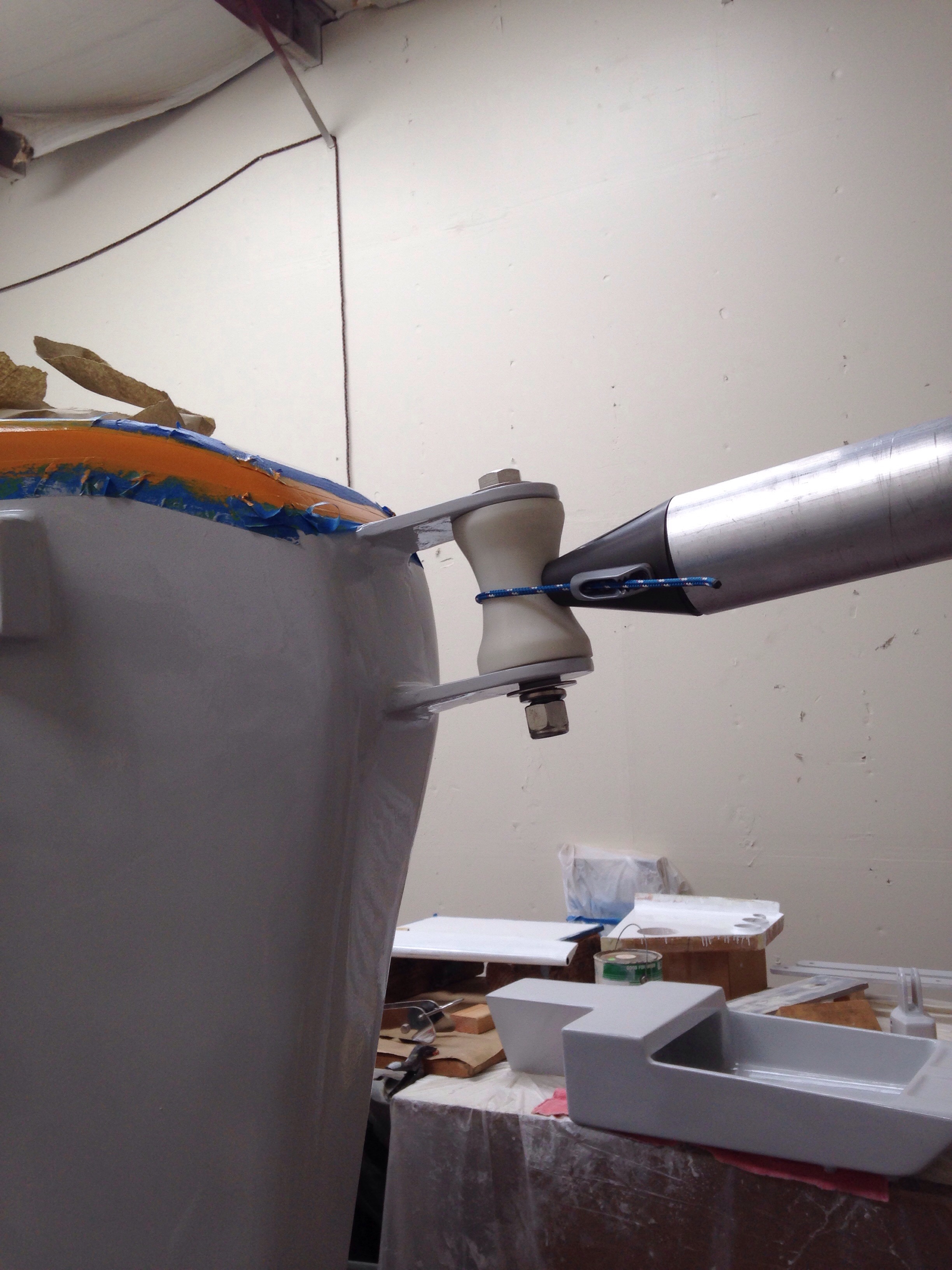
Boat build finishing with no shop looks like this. Bowsprit getting aluminum etched and primed by the side gate 

The Leneman Steps primed on a table outside the downstairs office

The hatch boards and aft cabin ladder being painted in the tent outside the kitchen window

And the first rudder in the garage getting a new leading edge 

This has been sitting 1.5years since Jim Antrim asked me why I made the water-entry point so narrow compared to the overall chord (thickness). The rookie heeded the master and set that aside to fix as the backup rudder. But living with the wind-vane trim tab rudder has shown that one should be saved for ocean passages work, and this first-built rudder should be the daily driver. So we’ll get it finished off in a series of evenings this month. 

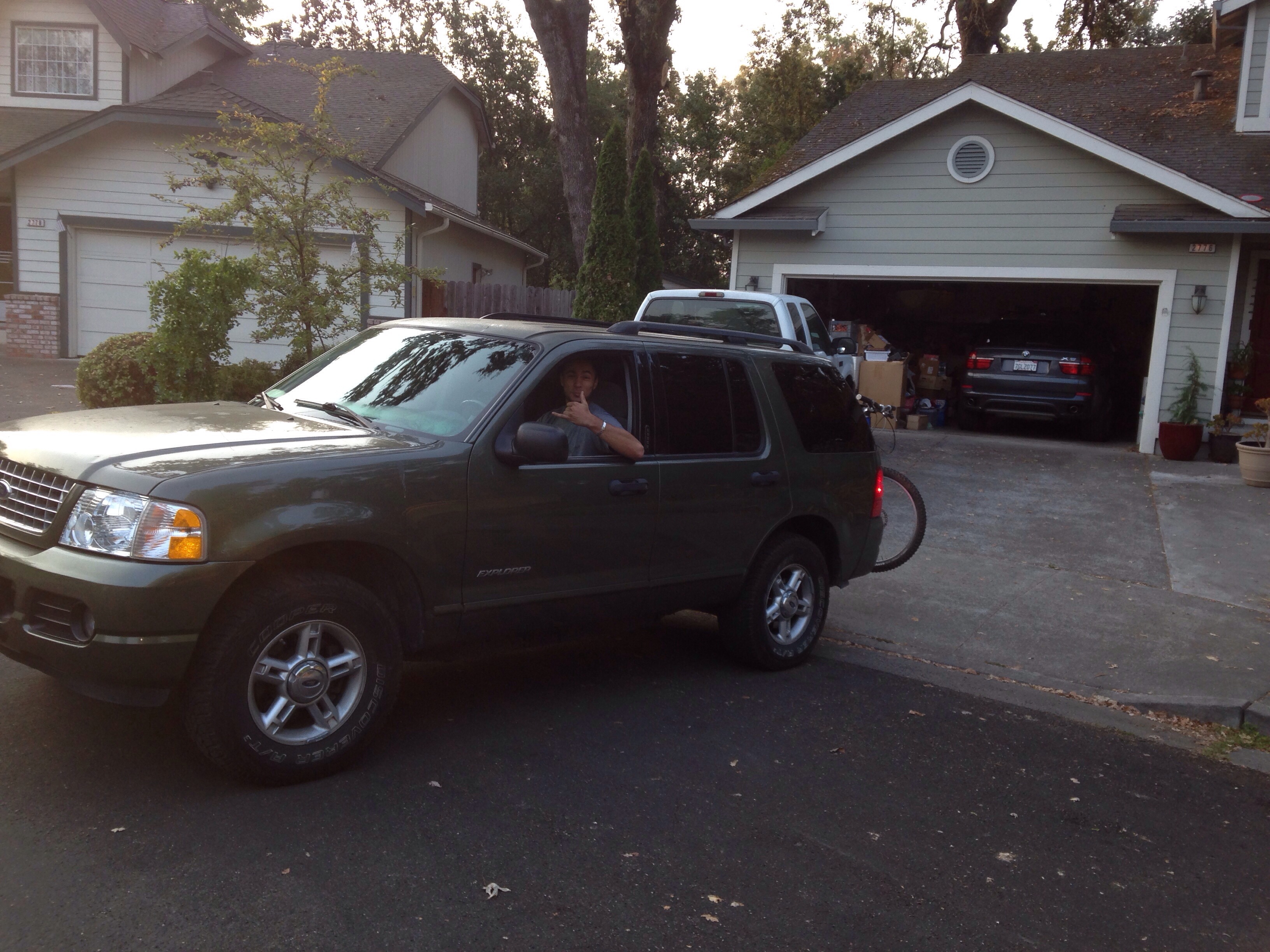
While the mast was in the shed we took the boom home and upgraded the things our first heavy weather day pointed out. No photos taken, but we added cross bracing around the winch, at the first reef clew position, and at the mainsheet connection point. Also built a line guide for the reefing line exit sheaves at the outboard end of the boom. Another hit of black paint to obscure all that, and it was back on the car headed to Richmond. 

Where do they put the end-tie slips you ask? WAY OUT at the end of the docks! Not a good idea to carry the 17′ boom out there (about 50lbs with all the gear on it) alone in the 20kt wind. Wheels and workmate bench to the rescue. The locals looked at this like I was nuts. 
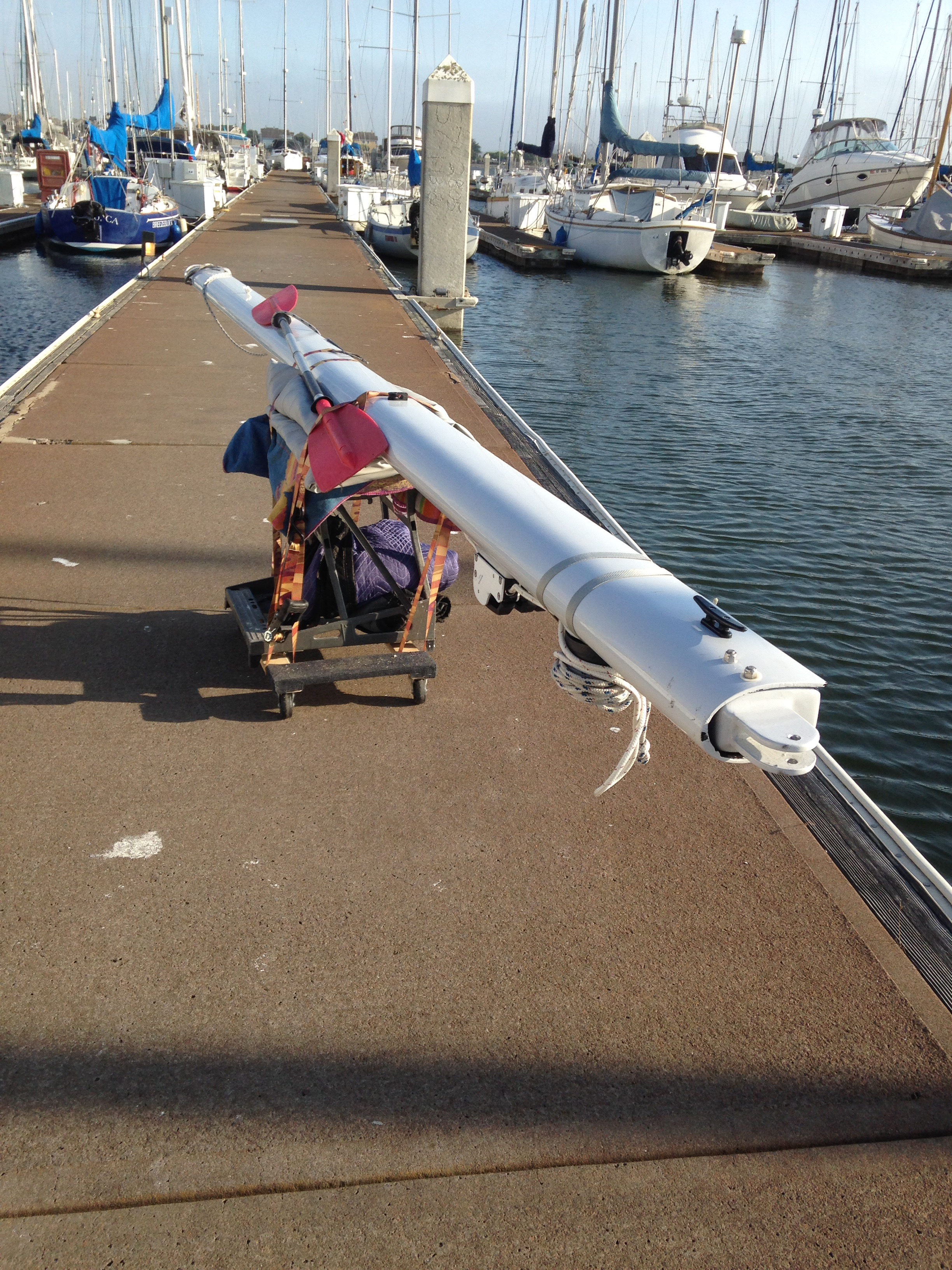
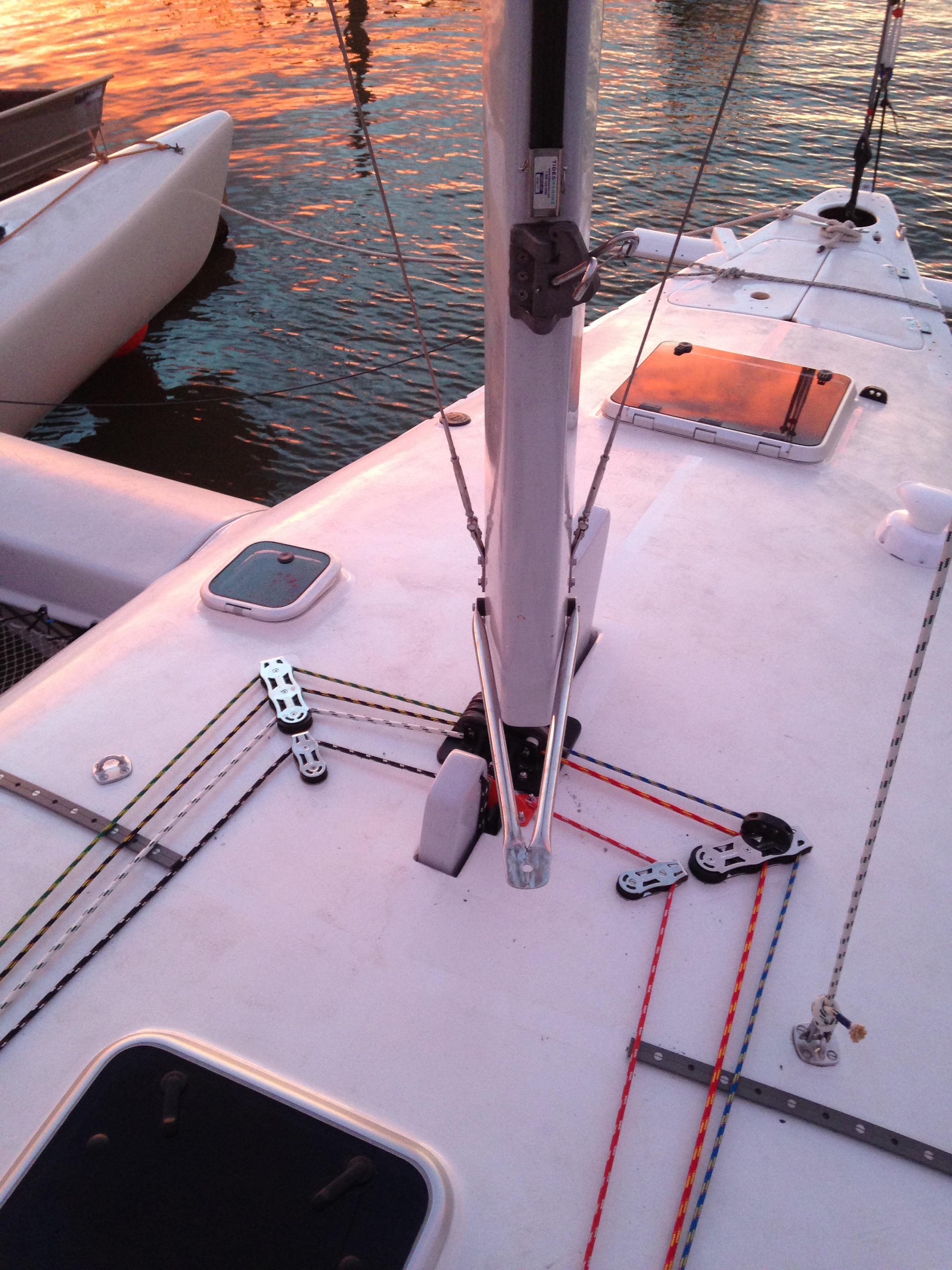
By Saturday eve the rig was all back together, main sail bent on, and the lashings tuned to rake the mast back just a little. I’m eager to sail it again and find out if standin more upright lightens up the heavy helm.  Kind of amazing how easy it is to adjust the tuning on this huge (to me anyway) 50′ carbon fiber  mast. 

As the big boat comes in, one of the small ones needs to go. We’re looking to sell our 11′ Topper, great Britain’s answer to the Laser. $500 for a complete, sporty little race and muck about sailboat. If not for you, tell your friends…

Ripping off the bandaid

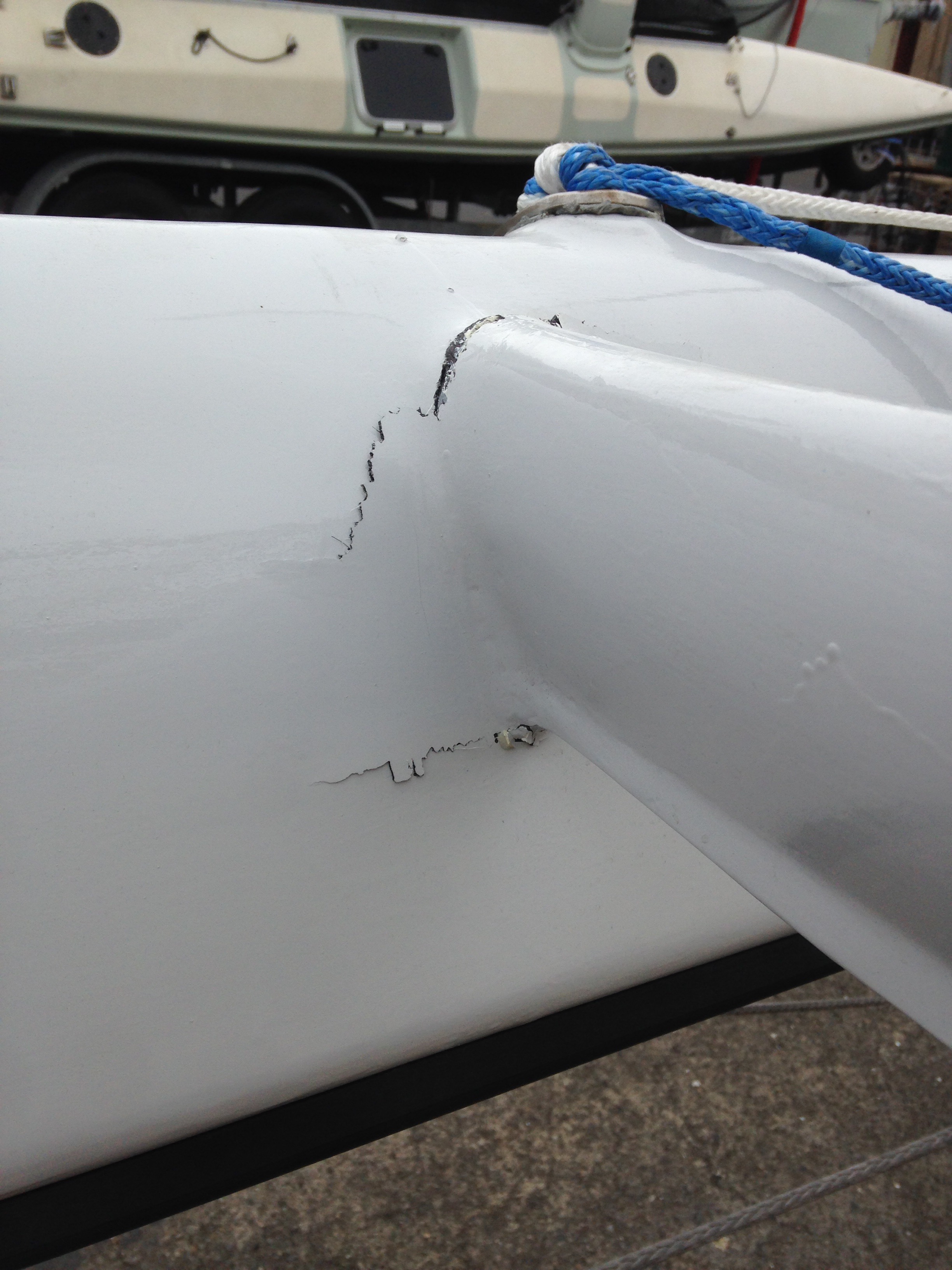
Ever pull off the band aid too early and things just aren’t right yet under there? Well, looks like we did that with one of the spreaders during that heavy-wind first sail. Here’s the starboard upper spreader, which took the leeward pressure that day. 

Ouch – what you’re seeing are the too-thin Carbon uni laminates used to bond the spreaders back on after the mast rebuild last year. In retrospect I was too concerned about blending in those spreaders, keeping it light. This time we’ll beef up those corners. 

Charlie and Jim remember hearing a sharp crack sound as we sailed but non of us could find the source. But I did midweek as I used the solo TopClimber to go get the topping lift shown in the last post. It was spooky to be up there and suddenly realize the damage overhead. Thought about trying a repair in place, but that lasted about ten seconds. KKMI in Richmond was happy to pluck the mast with Herb Craen and we set it on rolling carts in a very handy huge shed.  

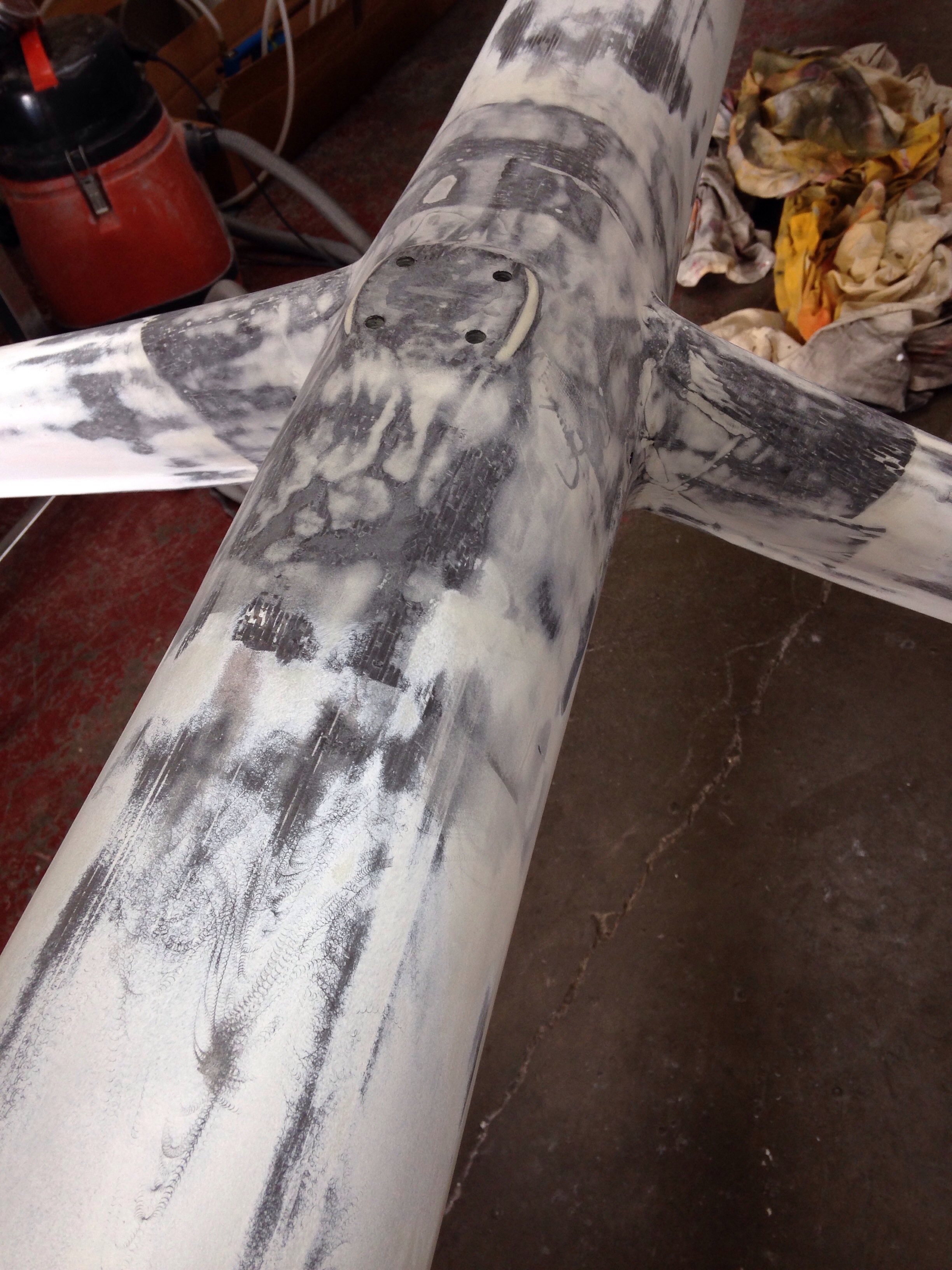
Repair day one was cutting and grinding away the wimpy laminate on the bad one, and sanding away the paint six inches back from the joints on the other three. All four will get two layers of 45/45double bias 9oz to make the bends, with some leftover 12oz uni (from the mast longitudinals) sandwiched in between, applied in a figure 8 to tie the two spreaders together across the front of the mast. 

Here’s where things stand this evening, with the spreader re-bonded and filleted in place. It was hard to guess which tools to throw in the car, so the painters tape was repurposed to hold the final position. Cross your fingers that nothing shifted after I left there today!

We expect the work to finish Thursday and we’ll sail this weekend. 

On the good news front, all the plumbing was finally finished up during the weekend, so the ladies get a proper restroom aboard. The flexible/rubber water tanks are working fine, and the grey water tank is in use for toilet flushing. All good so far. 

Ravenswing’s first weekend in Richmond was a full moon. 

The next big moon should have the boat out exploring. If you haven’t been full moon sailing on the bay, it’s pretty great when not cloudy. Drop us a line if you want to join Thursday or Friday Aug18/19. We’ll be practicing with radar, AIS ship identification and navigation software. We can touch n’ go at the dock to land those who don’t want to spend overnight on the water. 

PS – anyone see the F31 float on the trailer in the second photo above? That’s Race2Alaska now-veteran Ma’s Rover just now back home, about to get relaunched at KKMI. Pretty amazing coincidence to be using the same crane today. If you haven’t read up, go check out the wonderful sportsmanship of Ma’s owner Mark Eastham. After all the work and investment he put in to that race, Mark volunteered to help the F27 team sailed by a paraplegic crew who were approaching the event’s cutoff time. That crew was pretty exhausted but wanted to reach the finish. Mark and other racers didn’t just go home. I’m eager to here from him how he went aboard and helped that boat make it to Ketchikan. What an adventure. 

Argh, wordpress “upgrade”

Sorry about recent typos, out of order photos and cut-off posts. This new version of WordPress has some nasty flaws in use-ability. 
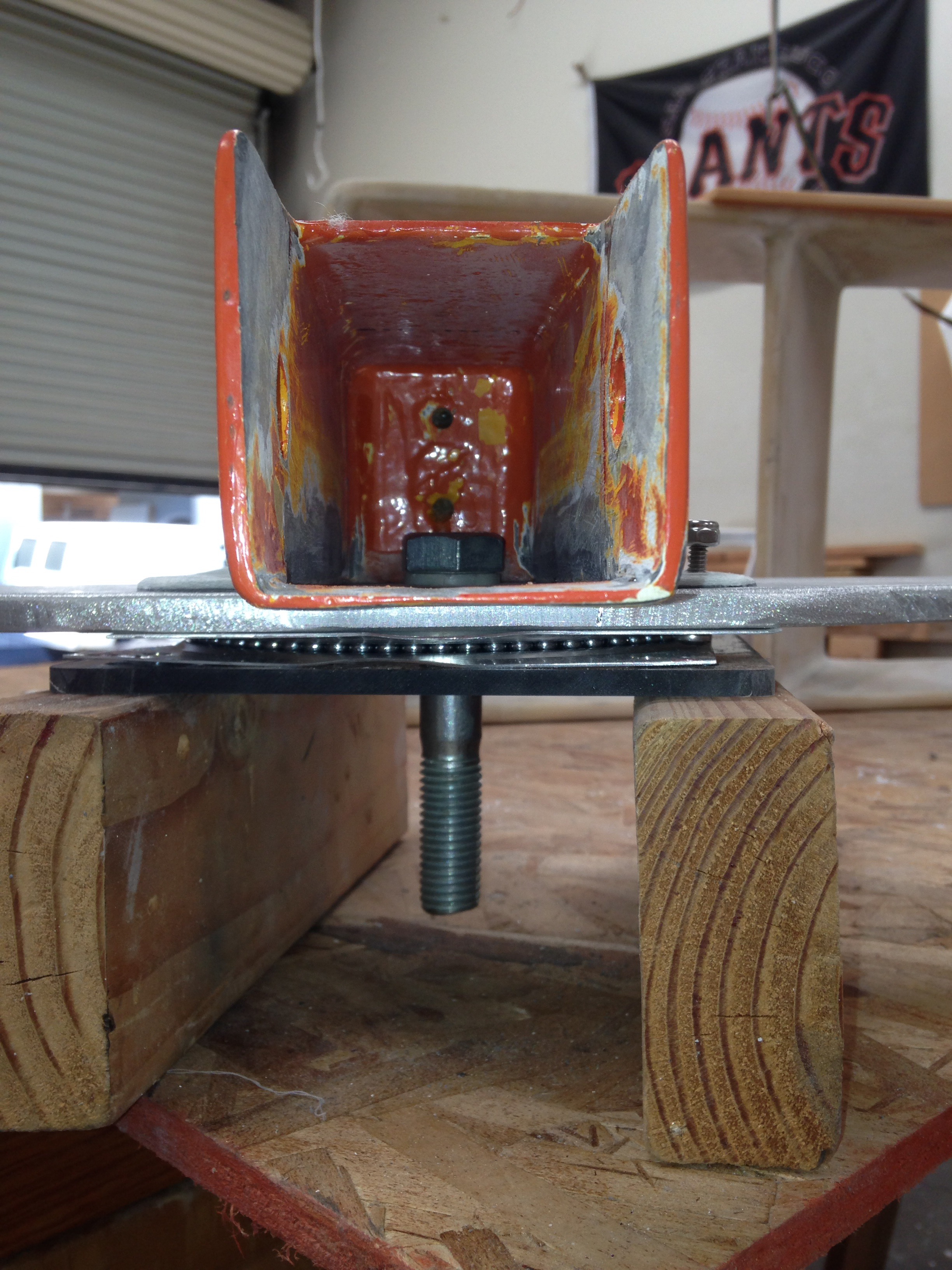
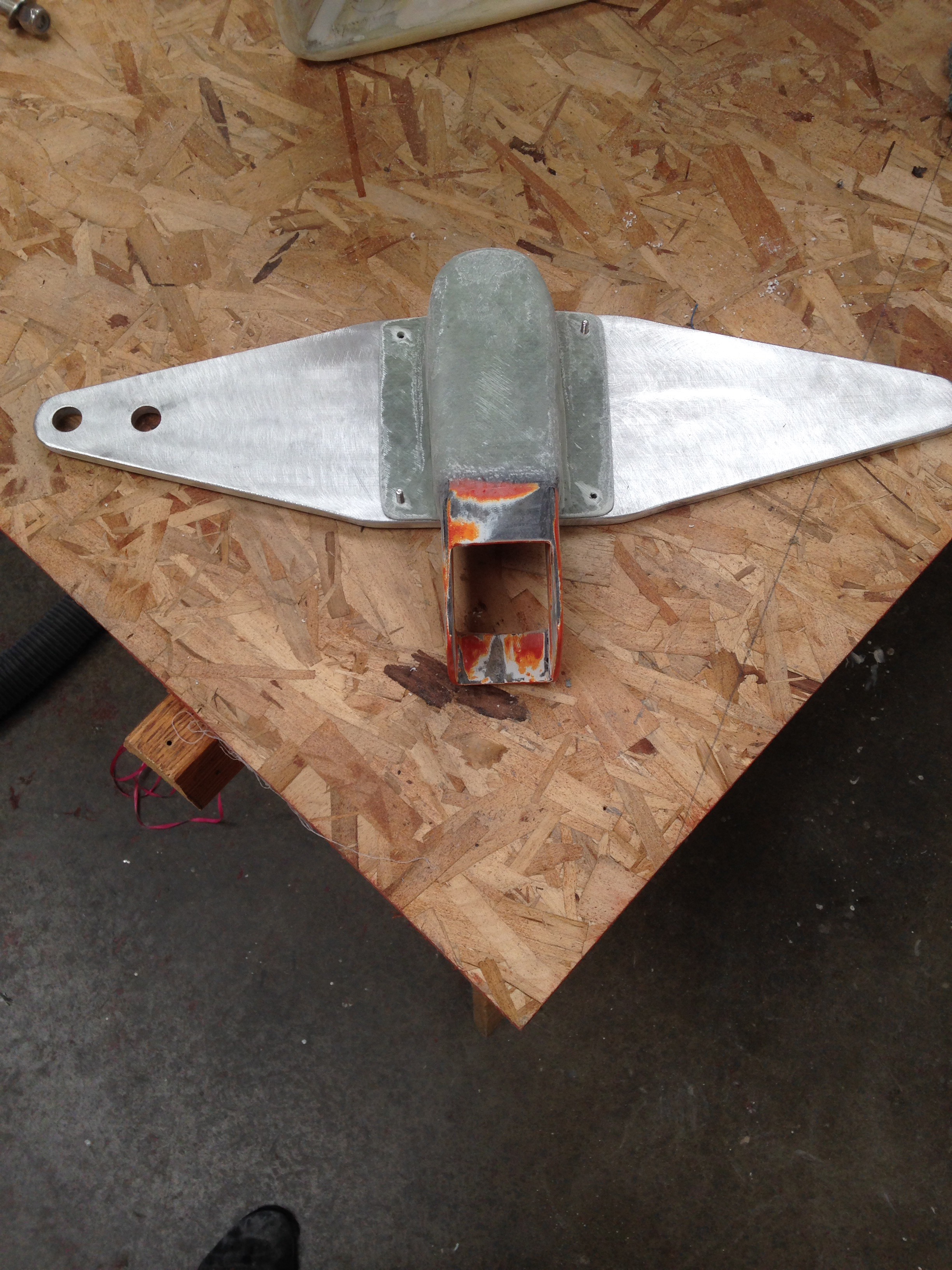
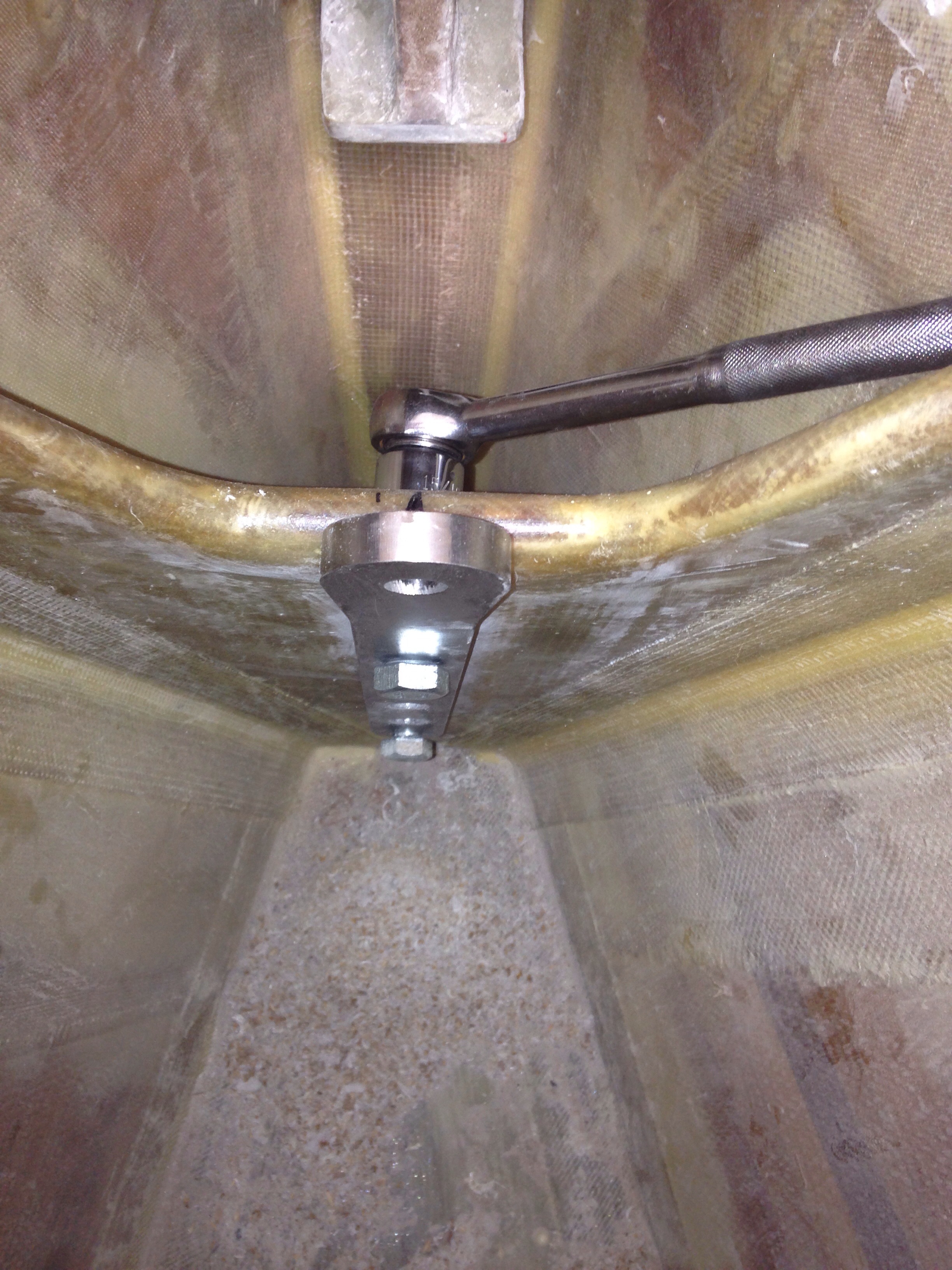
Anyway, the steering gear replacement construction is done and now it’s fair & paint. This wide (4″+) turn-table bearing spreads the load out well. Plus we added at 3/4″ bolt underneath to help keep the whole thing in column. 
And now we’re official, courtesy of the USCoastGuard. Ravenswing got her number today so we’ll get busy making an ID plate / board to mount near the chart table. That was quick paperwork turning by the govt!

We’re planning the boat’s first sail for this Saturday in Napa. We have six people saying they want on – can take a few more, so contact me if you want to join the inaugural crew. Can you say EXCITED?

Gone Fishing

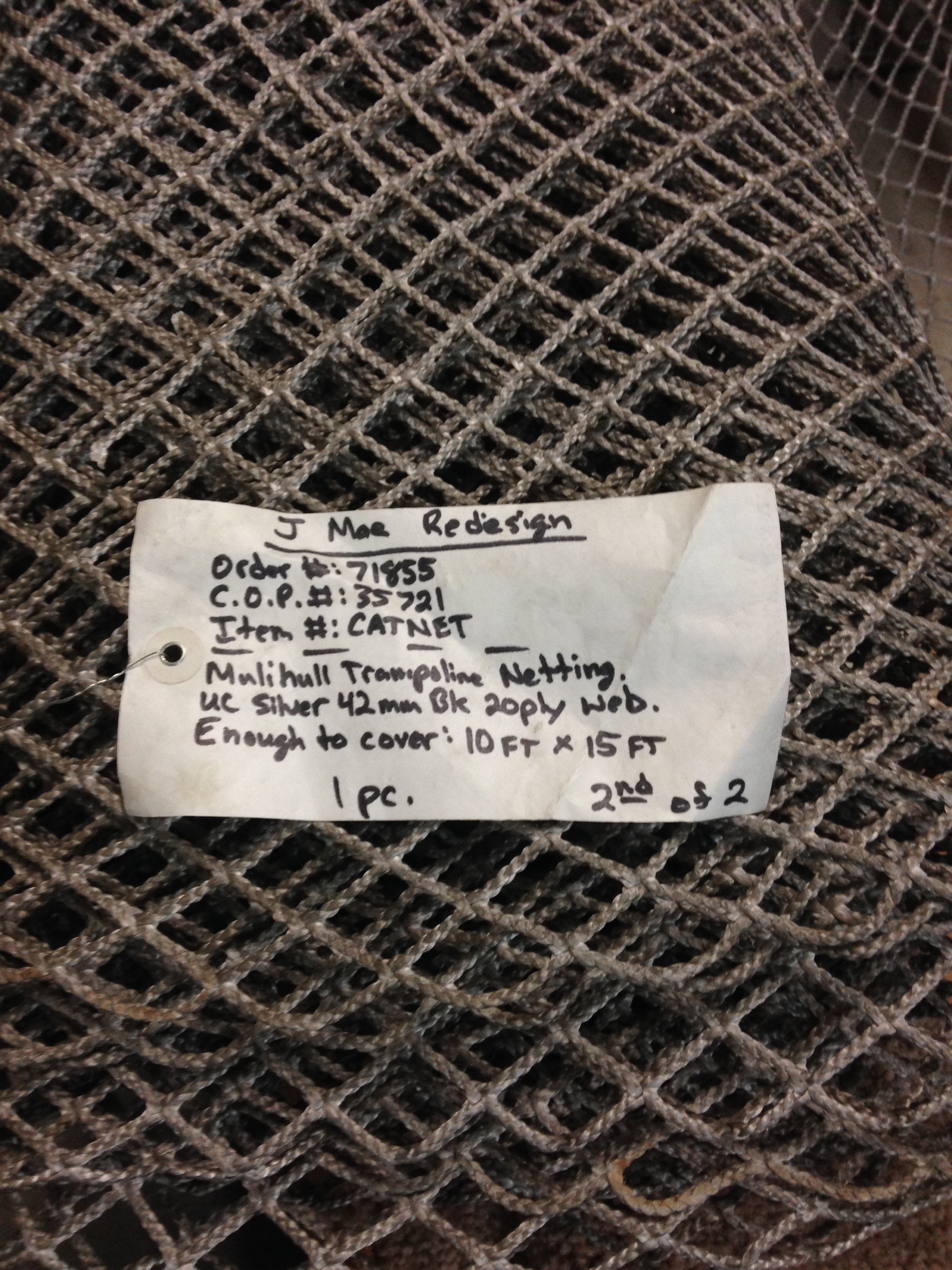
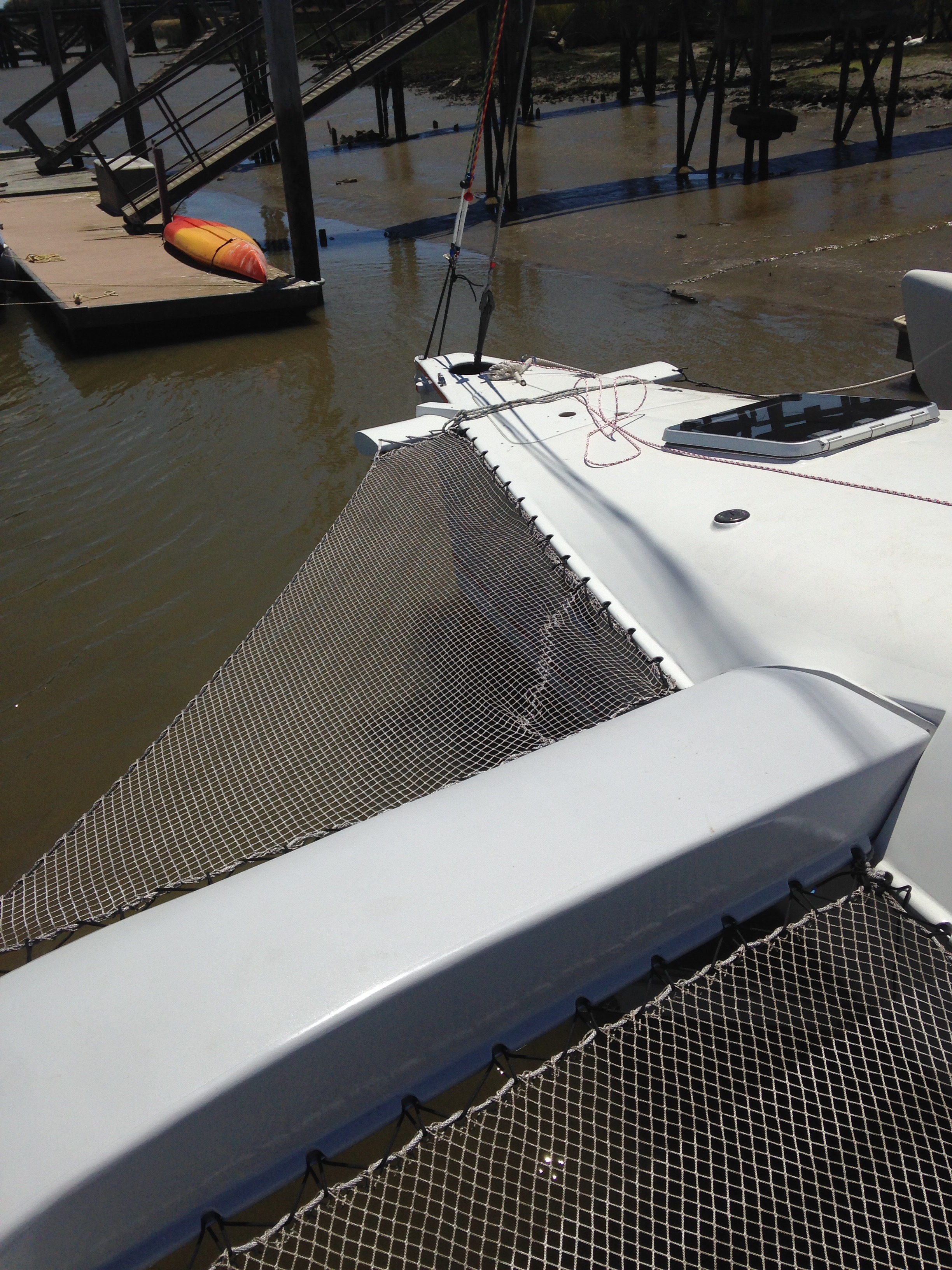
Some of you are thinking we’ve gone a bit nuts for not yet sailing Ravenswing. Believe me, it’s not for lack of desire. There’s just a lot to do first. Such as… It wouldn’t be safe on a windy SFBay day to hoist the jib on that skinny bow with no nets or pulpit. This weekend we got the bow nets built and installed. This whole project turned out really well. Starts with dyneema fishing net from net-Sys.com up in the Port Townsend, WA area (also in AK). They sell it by the pound from a ten foot wide roll. Our 30’x10′ order was about $1,900 delivered. An F31 might use about $1,500 worth. That and twenty or so labor hours gets you the same nets as the Oracle Amerca’s Cup boats. (Yep, from the same people). Here’s the stuff:


We found step one is to transfer the measurements to the ground with nails/screws/pegs every foot along the outline. We subtracted two inches from each side to give lacing-to-boat room. 

The netting is cut with a hot knife. Get a good one for this, and heed the 15second current flow warning.   We subtracted the two inches all around but added back one row of squares/diamonds for capturing a bolt rope. Roll over that single row edge, like up the pattern, and weave the bolt through the net. 

(On the bows you don’t subtract that two inches along the diagonal run from main hull to beam). Start by tightening the bow to float cable 

Next we positioned the net with zip ties! (Great idea Dean and Carlos). 

We took two passes of the lashing line through each eye slot on the boat, which helps keep the bolt rope in the net fairly straight. 
The black line is a Samson 5mm utility double braid. We used up a 300′ roll for all four nets. Long continuous runs make each net easily adjustable. Great project for the ambitious DIY-er!
We fitted the boom and sorted out various fittings – gooseneck, outhaul, reefing technique, etc.  

Keith, we respliced the upper back stay terminal to match the end of the lowers – all good now. And here you can see our Leneman “Delta Vee” main sheet. The red is all one line with a cross-over leg (see the middle path of the left hand triple upper block feeding the double on the lower right). Essentially this setup combines the traveler and main sheet into one tool. You can tension either end of the line and pull on the crossover segment to travel the boom windward or leeward. We’ll find out of the traveling is possible by hand or not. 

By Sunday afternoon the rig was ready for sails. We unboxed the main (sat a year in the garage!) Holy Cow is this beautiful, heavy duty work. Huge thanks again to Skateaway Designs for engineering all this.

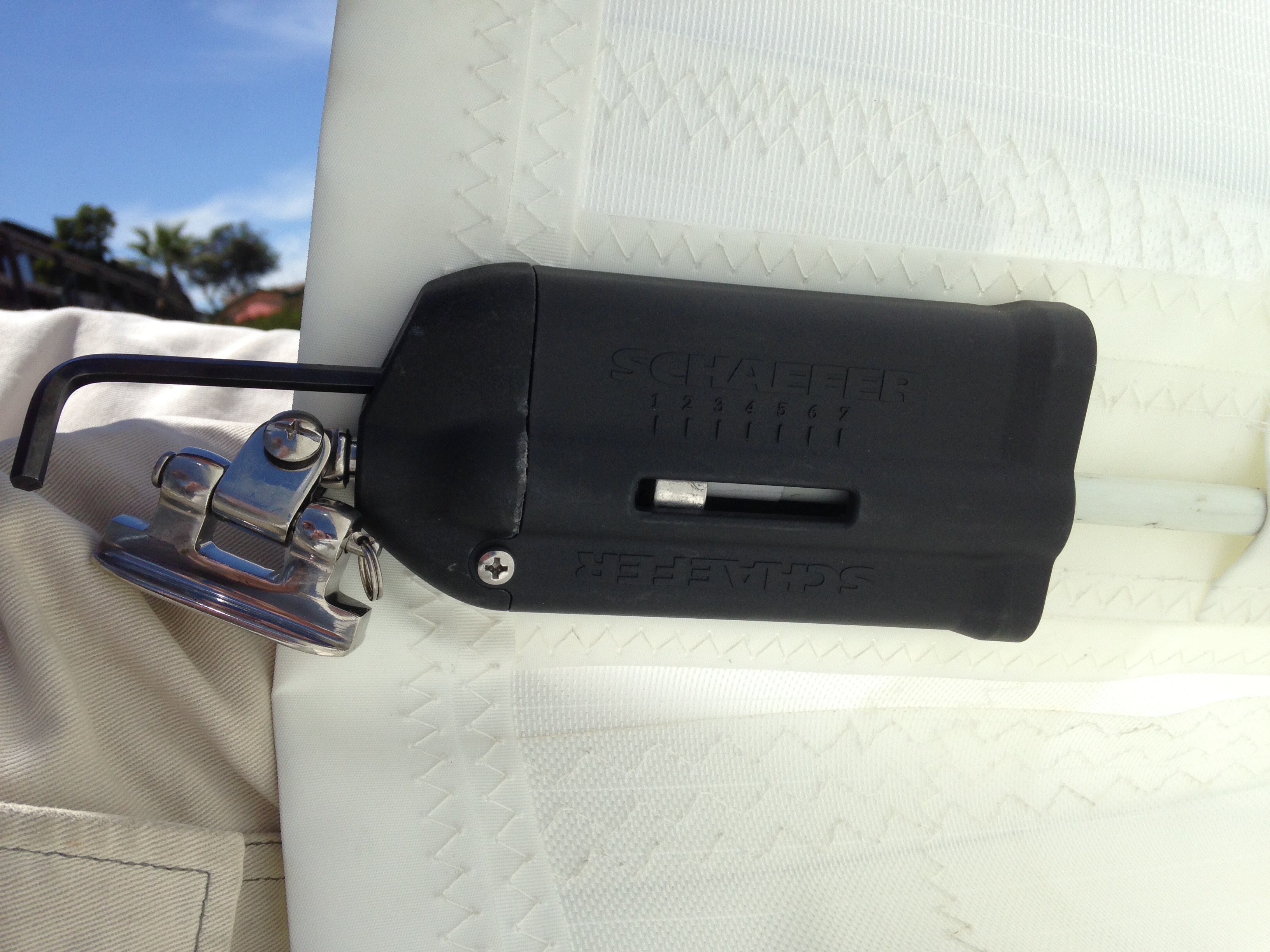
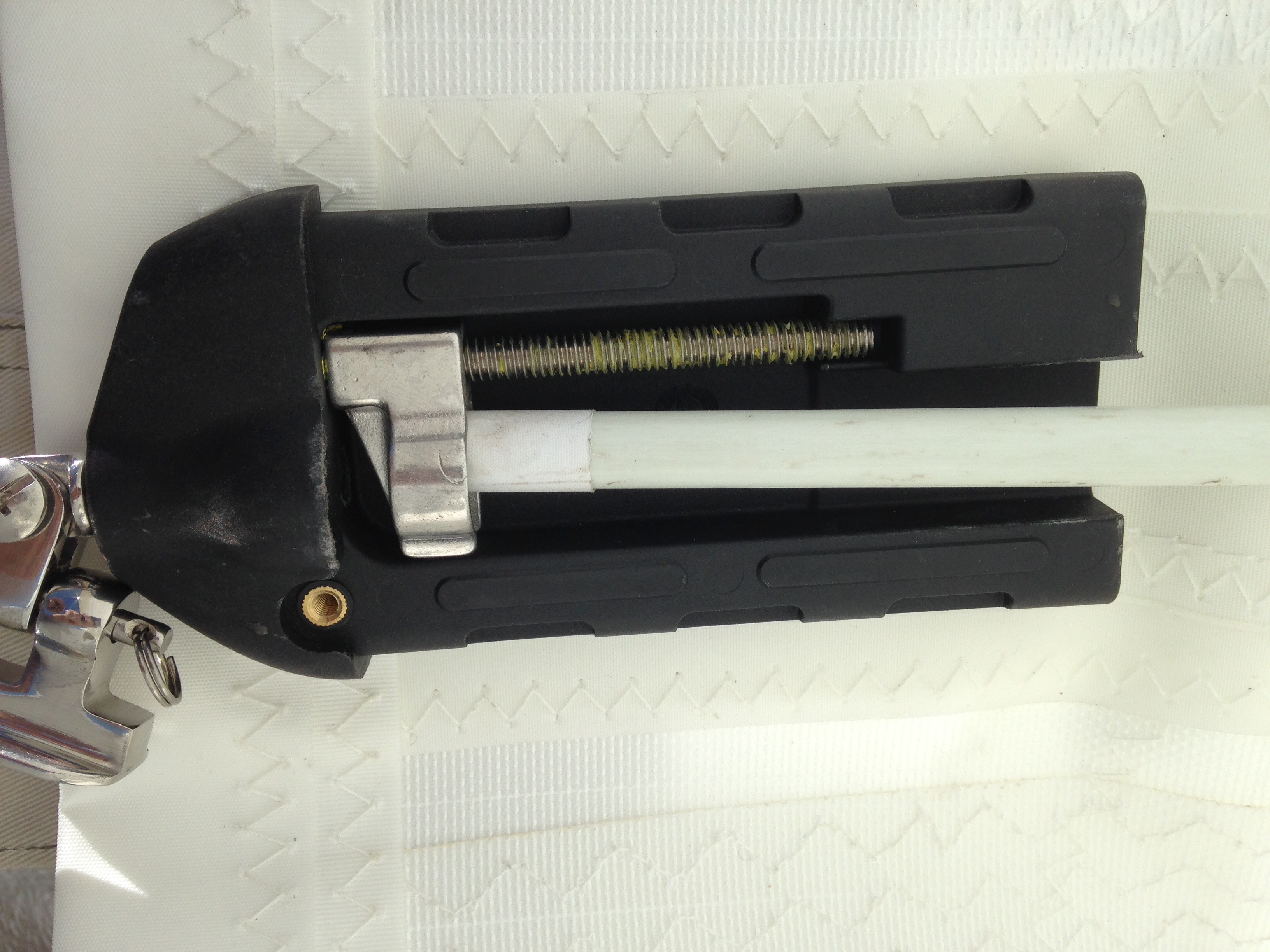
Charlie and I installed the battens and figured out the sail track. Look at these beefy Schaffer cars. 

That Allen wrench in the first photo is batten tension adjustment. Happy it’s at the mast easy to get to (our past sails have always been out on the leech). We were ready to hoist just as the afternoon land breeze kicked in. After a brief moment of “we can do this” reality of this 47′ tall sail set in and we wisely postponed til the next windless early morning I can get back to the boat. 

Another big item pre-sail is a steering gear change. Bottom line is I ‘over designed’ the tiller to steering arm connection and it resulted in some play in the steering. I could sense it slightlyin the shop but once underway (by engine last week) we knew this wasn’t good enough. After sleeping on it a brainstorm hit – the design could eliminate a junction by hard-fixing the tiller stub to the steering arm and turning the bearing surface horizontal (using a wide turntable style bearing instead of a boat rudder bearing). We need to make some new parts in the shop but the base on the boat stays the same. Did a dry-fit Sunday eve and this looks to be a big improvement. 

So, we didn’t hit the goal of sailing this weekend, but wth a good push in the evenings this week things should be good for sailing and moving the boat to a new end-tie slip in Richmond, CA for July 4 fireworks. As soon as she’s docked all attention turns to emptying and cleaning the shop for the July 7 handover to the landlord. That will be a huge relief but bittersweet loss of such a handy place to work. 

Sailin an enjoying soon. Right now it’s still a long punch list of small jobs to finish. 

1,000 words

A picture’s worth…

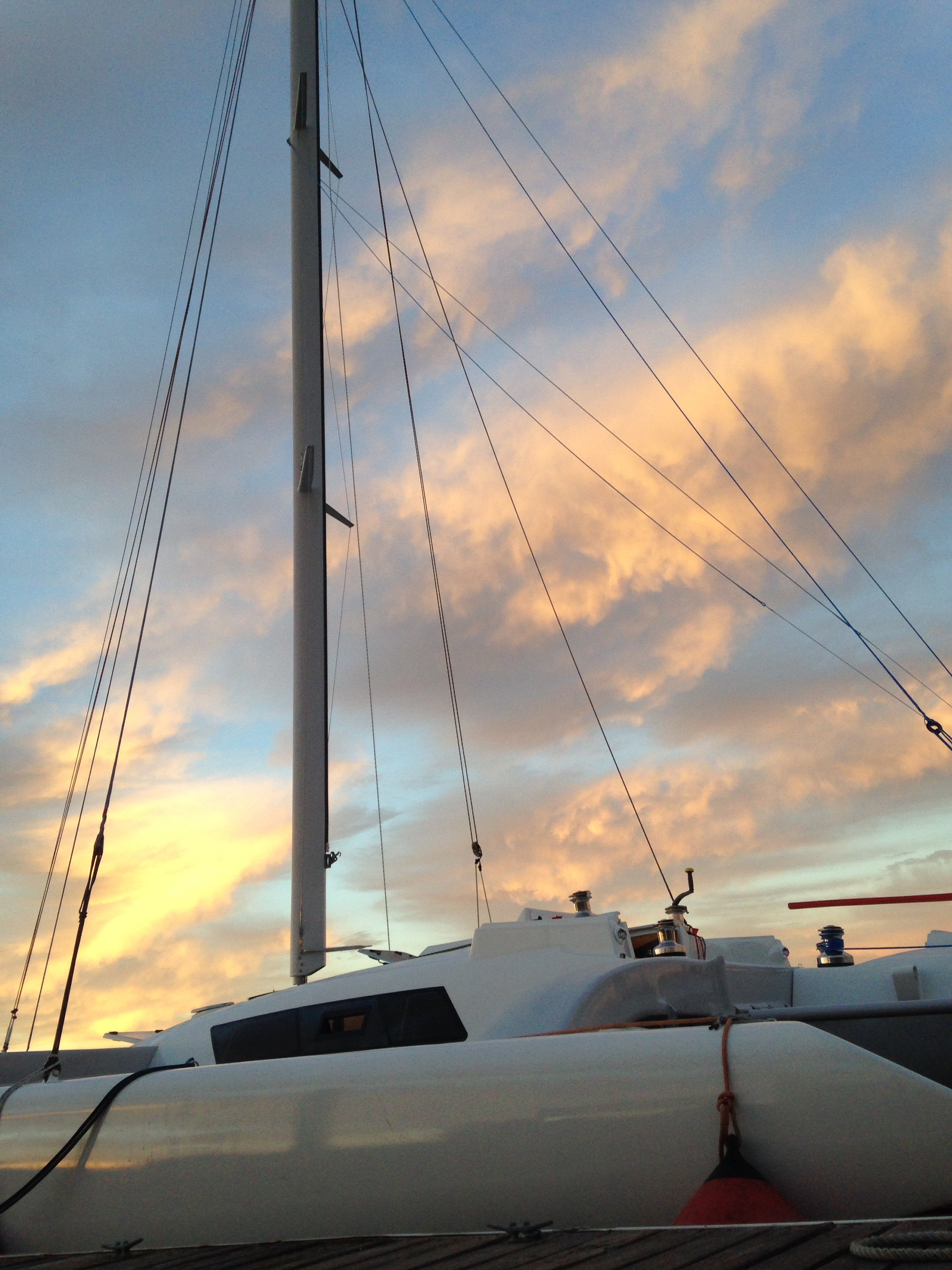
A peaceful sunset to celebrate the builder-now-driver’s first solo manuevers, docking Ravenswing back at CharlieJ’s after a big day getting the mast stepped at Napa Valley Marina. We again had a nice big crew starting at 8am, and by 3:30 the stick was upright and everyone else rolled home. I had a couple of quiet hours to finish standing rigging install chores, all the while fretting the wind pinning the boat up against the reeds and muddy bank beneath the crane. (How would we motor out of this tricky spot???)
But back to the top. The daggerboard “sticky wicket” emergency shop work led to an anxious Sunday re-install.

If that’s hard to see, it’s because it’s ALL THE WAY DOWN in this shop. Yea, the mast step can go back in over this trunk. This board is big. It floats, so moving it through most of its travel is pretty easy by hand, but the last foot or so up or down needs a winch. If we’re needing to pull it up fast because of an obstacle, simply freeing the down line will pop the board up three feet in a few seconds. 

With the dagger solved, attention turned to prepping the mast. ‘Dressing’ took about 3 hours by RickW, RickH and Dean. Holding the mast upright is highly dependent on one huge shackle on the front face near the top. Here’s the pin coming in from the port side into the Jesus shackle. (Yes we pray this thing never gives way)


And two years of making sure the halyard messenger lines didn’t get trashed in the shop or transport. So happy when all five halyards popped out the bottom. 

Now ready for the crane. We had to move about 500 yards to a stable crane parking pad with only the mud bank and reeds for the boat. (Sorry these are in backwards order)
The straps for walking it across the yard very different from the vertical lift, and we had transition time while the crane sat at the water and I went to fetch the boat. Standing it up was painless, especially due to the skill and equipment of the Napa Valley guys. 

Yard manager Mike had to stand there 15 mins holding the mast in the rotator ball while we struggled with lacing the 1/4″ spectra through the lacing eyes. But a couple of small trims, cussing and “just push harder!” Got it done. 

It’s amazing seeing a big mast rotating freely in the breeze – so foreign to the monolithic columns of seeming sturdiness that most associate with sailboat masts. A wednesday evening sail aboard Mile Leneman’s big fast cat Minette prepared me for today.

All shrouds and stays were set, so I had to call for the crane release. Now or never, don’t be shy about it… 

Step back a hundred yards and she looks like an F31.


Sunday night I had trouble motoring in close quarters. We need to sort out motor steering. This evening was a shot at redemption, and it worked. Holdin the motor makeshift turnin lines and respecting the transitions from forward to backwards made this go much better. 

A word to the other first time builders: 

That’s not a deck hardware photo; that’s the result of countless nights and weekends in the shop working one part at a time. The final install where this stuff begins to fit together is so worth it! Keep going. 

A few more glam shots here, then it’s back to the shop evenings this week for ladders, hatch boards, pulpit, etc. 

Time for bed(ding)

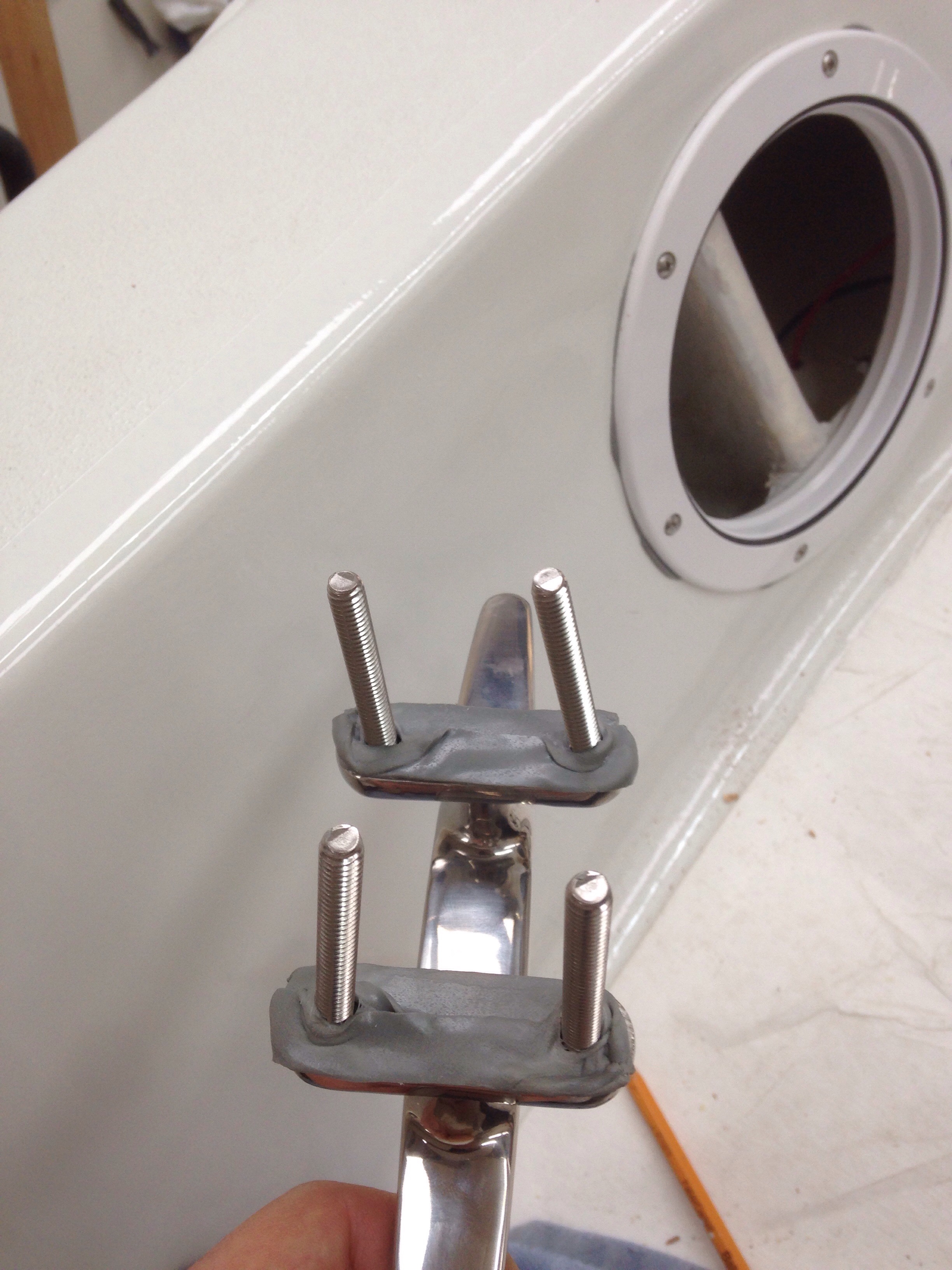
Quick update here before shutting down for the night. We’re really liking the butyl tape approach to bedding the deck hardware for leak prevention. (Reminder you can search the word Butyl on this site and find the link from last year to a pro tutorial)
Here the material is applied to the bottom of the part, and underneath the bolt head:

20160509-235905.jpg

20160509-235919.jpg

20160509-235937.jpg

In some cases it makes more sense to put a small ring of butyl rubber around the bolt hole on deck, then press the part in to that. Try it either way. But in all cases the bolt head must be kept still, not disrupting the butyl placement, and the nut tightened against the bolt. I did all parts where one person can reach (coaming winches, for ex), but mostly this is a two person job. Great use of one’s son just back from college this week! (Thx Griff). And Charlie came to lend a hand too. He was forced to wash all the brand new bolts in acetone, and we were surprised by all the machining gunk at the bottom of the parts cleaning tray. This cleaning seems sure to help stop leaks later

20160510-000530.jpg
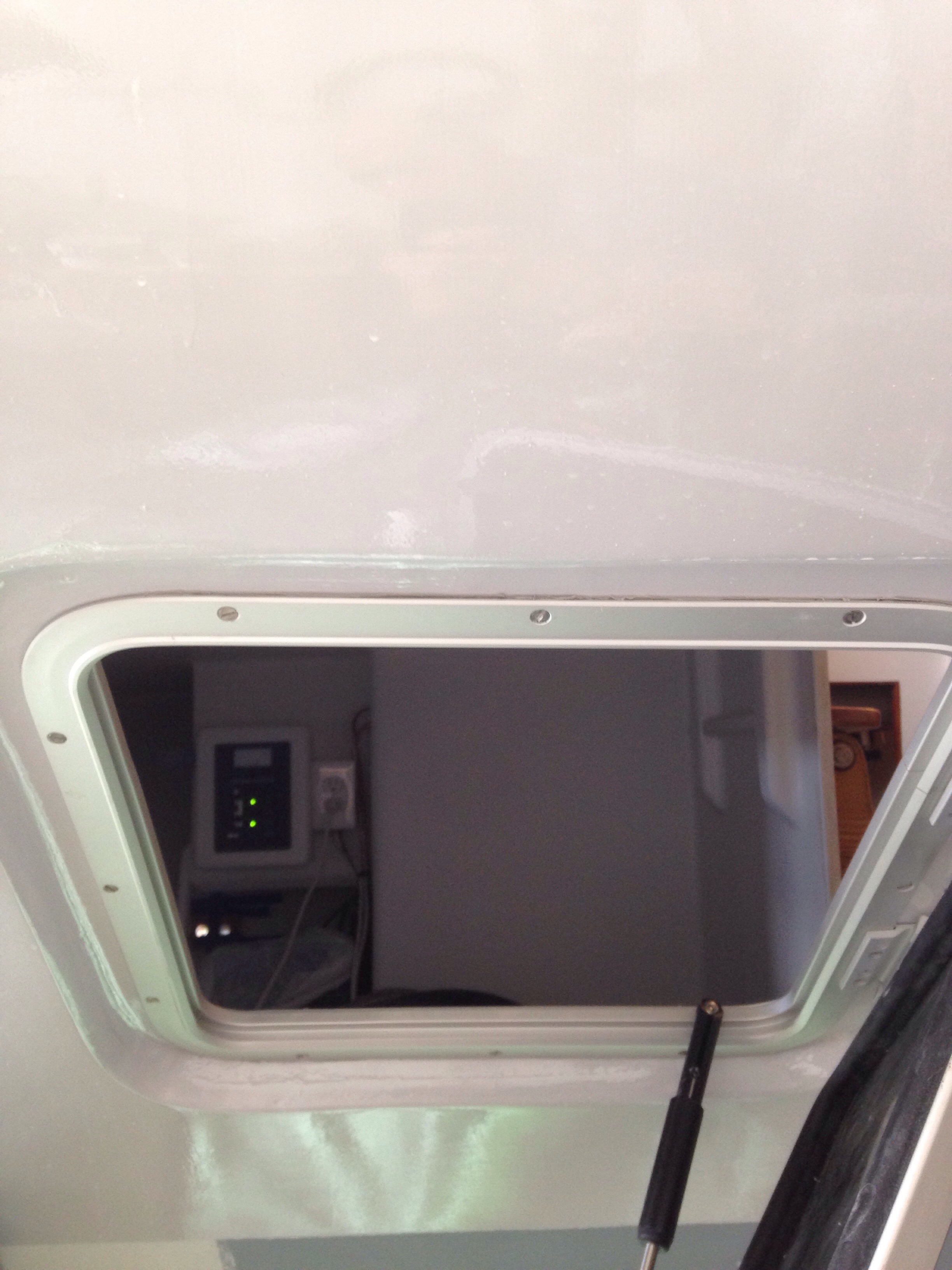
Along with sailing and docking hardware, we have four hatches to install. Here’s the escape hatch under the starboard aft beam.

20160510-000723.jpg

20160510-000740.jpg
See how close to the waterline that is? Our intent is to NEVER use it as an emergency escape, but frequently make easy loading of groceries from the dinghy in exotic anchorages!

We took a recent drive to Sausalito and stopped in for progress on the Matthew Turner – being – built – tall ship (that’s probably enough for googling). The timeline has been roughly parallel with our build, but their scale is immense. If you drive through Marin, this is a must see!
This 100’+ sailboat is being constructed from local timber.

20160510-001151.jpg

20160510-001219.jpg

20160510-001236.jpg it’s just amazing workmanship, and even though they’re using modern tools, the techniques of traditional wooden boat building are fully in play. Hand carving every plank (averaging over 3″ thick!) and steaming them in place, three a day, for months, all by the continuous stream of volunteers. Mankind at its best :)

This ship is very close to Origami’s old storage yard, and the shop of builder Gordie Nash. He ran a little hands-on seminar for synthetic rigging, and we got our splicing techniques all figured out (and Papilon gets a STRONG bowsprit upgrade after her Farralones race)

20160510-001755.jpg
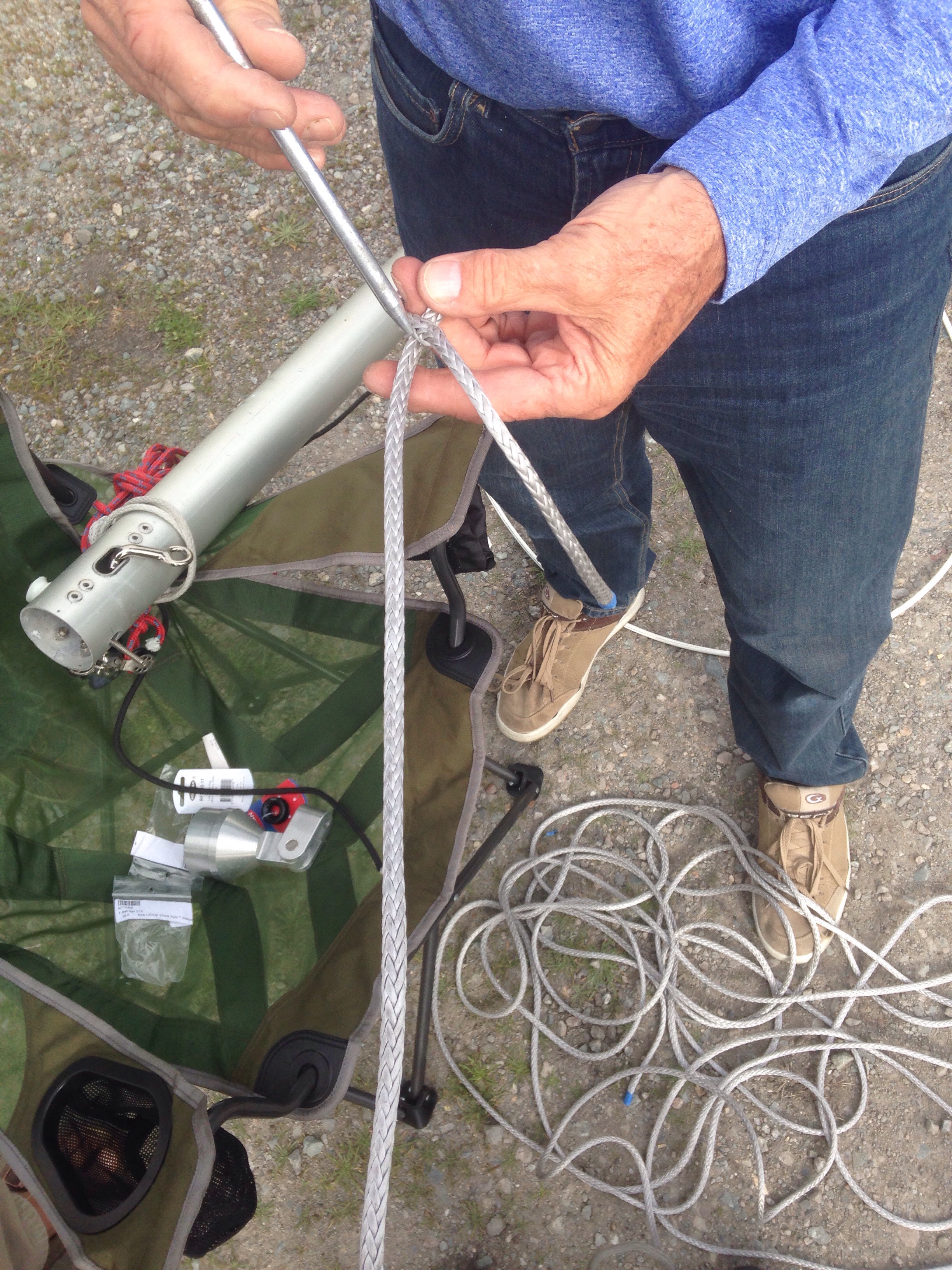
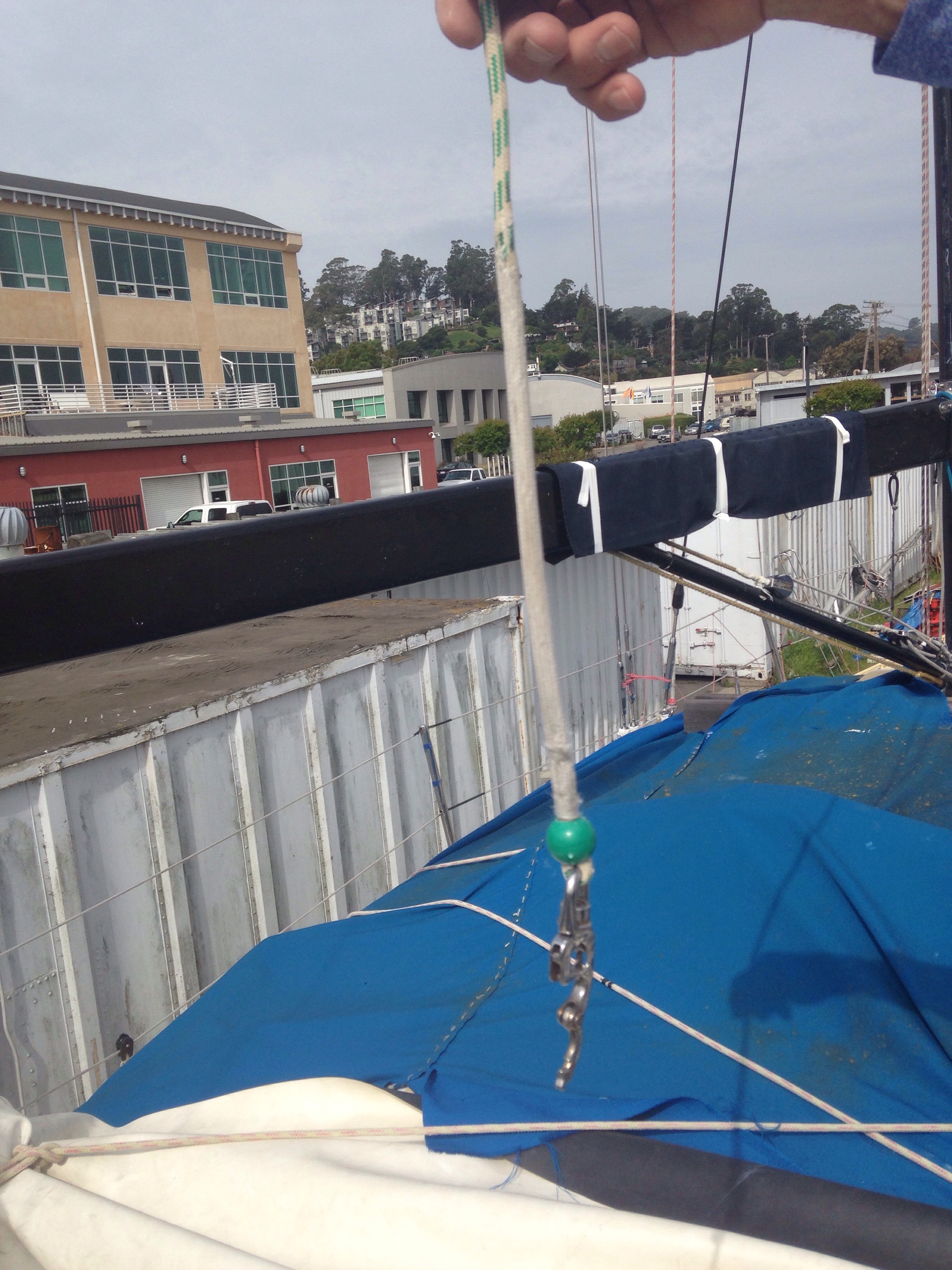
Here we’re drawing the long end of the line through the splice hole to really lock in the no-slip feature. I hadn’t known that trick and now feel much better about my halyard shackles holding for life. Charlie and I each also ordered some spectra cover material so we can protect halyards near the shackle ends – the far end of this light colored cover is frayed and buried in to the cover of the halyard line. Tedious job but a great result, especially for a spinnaker or reacher deployed for days on the ocean.

20160510-002201.jpg
We listen carefully to everything this guy says, except that he was a little embarrassed by the results of this year’s Vallejo 1-2. Yea, he bulleted both days. Again. 75 miles of racing with everybody to his stern, upwind both ways. Modest and damn good sailing.
And one curious note from that session – Gordie is covering his dyneema lifelines with cheap-to-buy electricians cable shrink wrap. Definitely need to get the NON-glue version, and you can pick most any color you can think of. Very clever.

20160510-002419.jpg

Golden Gate Bridge

Last week we showed off the white and grey paint job. But it needs a little splash of color, too. The paint purchase included a quart of nice royal blue, but it looked like Tommy Lasorda’s big belly in a Dodgers warmup jacket. My mother and her father would be ashamed. So we tried three time mixing bits of red into the can of yellow paint on hand, but the pukey gold results were frustrating. Then with the last of the red paint can, we dropped in bits of yellow in search of orange. Suddenly the boat’s accent color jumped out – Golden Gate orange :)

20160422-215846.jpg

20160423-090211.jpg
There are many ‘odds and ends’ smaller paint tasks being checked off. Here we’re sprucing up the wine cellar for Jimbo:

20160423-090655.jpg
And the boom is finished:

20160423-090820.jpg

20160423-090850.jpg
We put together the bow sprit parts supplied by Keith at Skateaway Design. This is a slick system; it uses the pole only as a positioning device, not load bearing. All the forces are passed through to the bow, the bobstay and the whisker stays. The reacher roller furler hooks on to the stainless steel ‘J’, and the spinnaker tack enters the pole from the slot in the cone fitting, and exits the center of the end cap. (Note to self, the bobstay measure is 103″ pin to pin)

20160423-092158.jpg

20160423-092256.jpg

20160423-092318.jpg
This sprit does not retract upwards; it turns to the side by ‘unleashing’ one of the whisker stays. The bow end rotates on the white delrin roller:

20160423-092552.jpg
Question here for Keith…
Are you thinking that a halyard shackled to the outboard end is always the upward support means? Perhaps a phone call when you’re back home?

Windows and plumbing up next.

All settled in

The boat shop is busy again now that (a) Griffin is officially a NorCol Golden Bear, (b) Colin closed on the duplex in Virginia and (c) Jeanne’s folk’s San Jose house is ready for rent (that last one took us a solid 5 day push to get done!)

20150830-170302.jpg

Here’s how the mast foot finished up. The perpendicular centered web of aluminum that Keith asked for was installed before building the new end cap.

20150830-170450.jpg

20150830-170515.jpg
While the bonding putty dried, we went back to re-attaching the 175 Tides mainsail track clips.

20150830-170630.jpg
This was done on Carter Time – an unfortunate reality warp wherein the husband asks the wife to come over and help put these screws in …”it’ll take us about an hour”. Three hours later, plus a trip to Fastenal for more screws because someone painted the heads of the originals, making them useless, and the wife is returned home. Carter time sometimes applies to mountain biking but seems primarily to be an acute problem around the boats. Has anyone else been cursed with this affliction ?

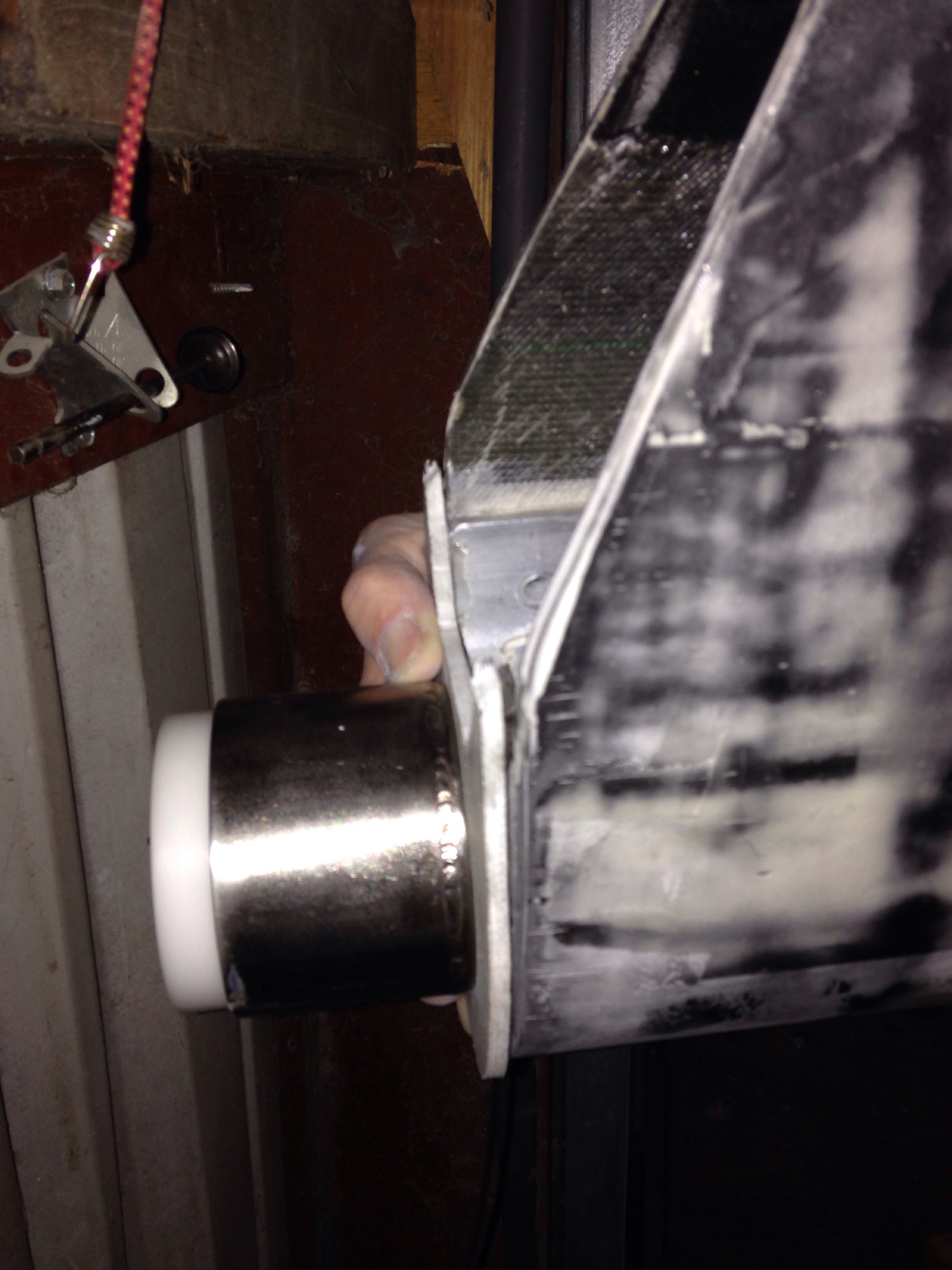
After the new web, the cap was bonded and carbon-wrapped. The nylon-insert backing nuts holding the SS cup got red Loctite are now entombed, but we don’t expect they’ll ever need to be touched.

20150830-171235.jpg

20150830-171254.jpg
After a few more hours of installing hardware (gooseneck, sail track, etc) the rebuilt mast was complete. At 225 lbs we needed a new way to get it atop the trailer. Hmmm- look how the beam extends about 36″ out the eave of the neighbor’s roof…

20150830-171512.jpg
Late Saturday afternoon the shops neighborhood was deserted so we grabbed the ladder and bolted the chain hoist to that beam. With the mast on rollers Jeanne and I pushed it up against that building, lifted it 8′ in the air with the hoist and then drove the trailer in very close to the building. One local guy took pity and came over to help us steer / push the mast in to place atop the float and the whole thing was pretty smooth (but always stressful to lift these big expensive parts way up high!). No photos were taken – we had our hands full. Here the mast clears the pickup cab by 2 feet and overhangs the float end by about 4′

20150830-171953.jpg

So here at the end of August “the big parts” are all on trailers, stored and ready for launch – floats, mast, beams and daggerboard. The main hull needs a week of final glassing bits and fairing, and all of its exterior paint. The interior is 95% prepped for final paint, which will be sprayed this week. After paint is done both inside and out, we’ll do wiring then plumbing and finally install all the deck hardware. It’ll be a very busy September in the shop.

Taking flight

Congratulations to Griffin as he heads across I-80 to Univ of Northern Colorado. Your parents are very proud of your work and choices to start this next life step!

20150815-230404.jpg
Jeanne is making the drive with him, and the house is eerily quiet today. So the builder buried his head in the boat work today so as not to mope about the place.

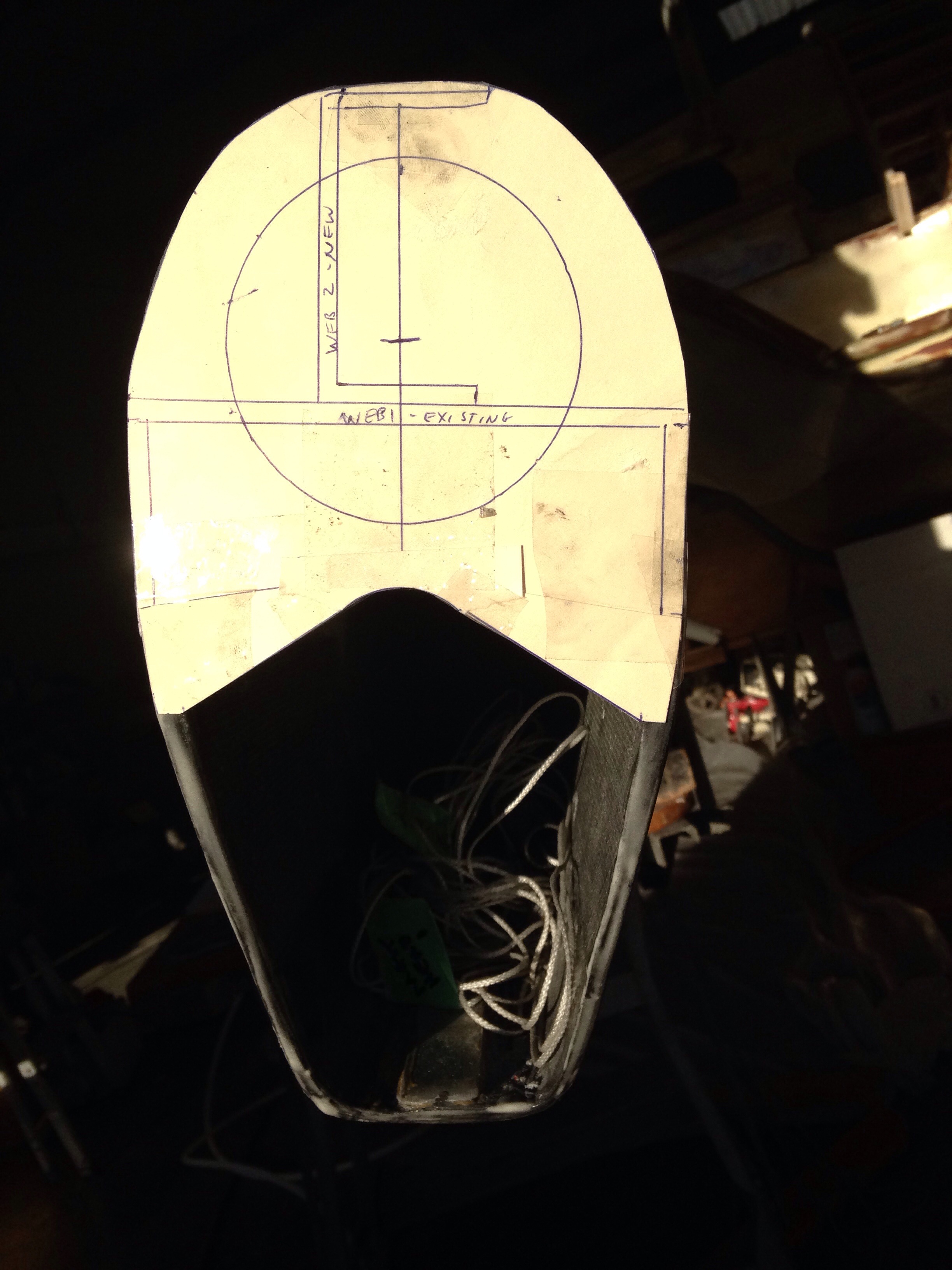
Last week we visited Dean Pederson’s place to see the custom 25′ Brown tri he’s preparing to launch (more on that when we get some photos); that boat has a lovely 35′ custom carbon mast. The rotator cup looked built on to an end plate. And the next day Keith at Skateaway Design laid out our plan to add one more fore/aft web inside the last foot of mast, then cap the bottom and affix the new steel cup to that cap. All the compression downforces will then be shared through both the forward walls of the mast and a Tee structure inside. This cardboard mockup shows the internal webs underneath via blue ink.

20150815-231215.jpg
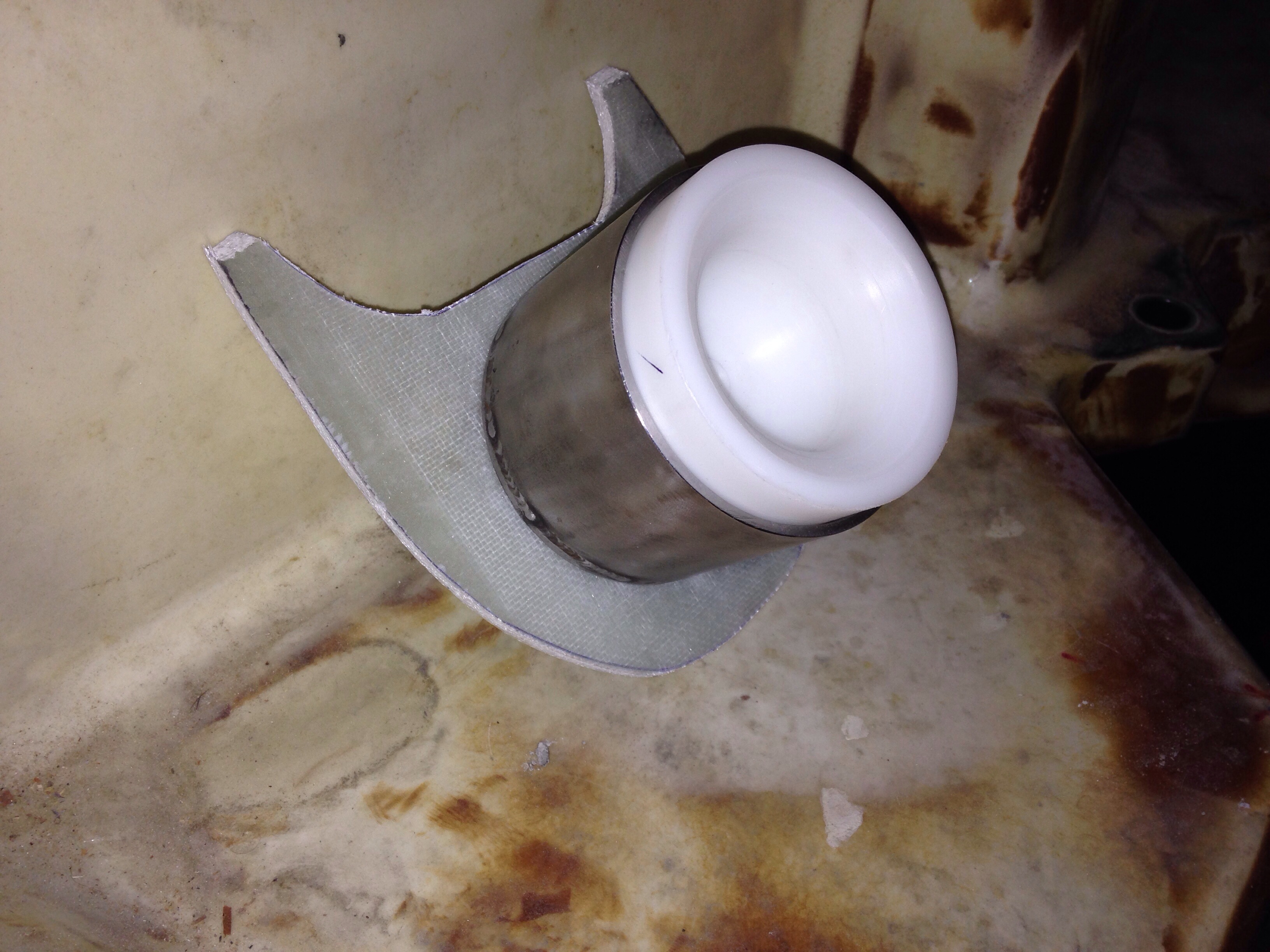
The cap was made by laminating a dozen layers of 12oz under vacuum on the work table. The cup has bolt head recesses cut inside – the backing nuts will be entombed after the cap is bonded on so we will secure them thoroughly.

20150815-231531.jpg

20150815-231546.jpg
Now we’re waiting for a piece of aluminum channel to make that final web inside the mast.
The new gooseneck position was drilled and tapped today. Goose visited yesterday and worried how we’d get that backing plate 31″ up inside the mast. It got slathered with high density putty and hand placed about 28″ in, and slid the last inches with a pusher stick. Careful repeated tapping set the plate down in the epoxy putty mix and it bonded well overnight. This morning the mast was flipped back over and the thread tapping for 8 bolts went in fine.

20150815-232113.jpg

20150815-232126.jpg
To beef up the last two feet (spread the load a bit above the 12″ internal webs, we added one more spiral wrap of 5oz tape and 28″ more of 6oz longitudinal uni.

20150815-232420.jpg
Above the gooseneck area the mast is now complete so the painting progressed well this week. It’s done in Interlux Platinum color – same as the beams last month.

20150815-232600.jpg

20150815-232618.jpg
This has been good learning of the roll & tip method, and more importantly how imperfect fairing or priming shows through. If the surface isn’t perfect before painting, the paint ‘ain’t gonna hide it, but rather it accentuates the blemishes. And yesterday we learned that trying to work all angles vs gravity is tricky, as in painting around the whole mast at once. The face that was pointing up looks great (those photos above), but what had been facing the floor ended up with some paint blotches and runs. Pretty frustrating tonight to be sanding away money and causing repaint work tomorrow. See the after-wet-sanding spots from tonight.

20150815-233221.jpg
With the mast almost done we made it back to the main hull today, and thanks to Charlie’s loaned right angle drill finally tackled the awful access job of boring five big 5/8″ holes in the forestay bulkhead to receive that chainplate. Colligo Marine took our specs and custom cut the chainplate in titanium. Thank you Guy Stevens for challenging me how we’d inspect and/or replace a stainless steel chainplate since it’s getting permanently bonded in place. The titanium is going in to this “forever” spot instead.
It was over 90 degrees up in this corner of the shop, with really bad angles for the installer’s knees, etc. After many foul words uttered and about an hour and a half all holes were lined up and the plate successfully dry fitted. It’ll get bonded in once the right bolts arrive.

20150815-233918.jpg
The boat shop will go quiet for a few days while I fly to CO and join Jeanne for freshman parent orientation and sightseeing in Greeley/Boulder/Denver area. Then we’ll get this mast project wrapped and hammer away at the cabins finish details…

Quick photos for Keith

Today we finished up the mast spreaders and prepared the last two feet of the mast for its new base attachment.

20150810-191641.jpg

20150810-191659.jpg
Good news for Stephen and Curtis, Jim Antrim, Guy Stevens and Keith – all that deflection at the spreaders is now totally gone; the walls are much stiffer!

Here’s the last foot or so of the mast before and after removing the steel pivot pin:

20150810-191847.jpg

20150810-191903.jpg

20150810-191929.jpg

20150810-191942.jpg

20150810-191956.jpg
And here’s the relative size of the new cup that has to get mounted inside the mast:

20150810-192039.jpg
Stay tuned for a proper plan on fixing this cup solidly…